A good security plan doesn’t begin with a camera. It begins with control. If you can direct how people move through a building, after hours or during a rush, you’ve already solved half the problem. That is the quiet superpower of expanding security gates. They look modest, fold away neatly, and do the job other barriers overcomplicate. If your building sees fluctuating traffic, awkward entrances, or changing risk levels across the day, accordion security gates are the kind of tool that pays for itself without demanding constant attention.
I’ve specified, installed, and worked around a lot of commercial security gates in retail, warehousing, hospitality, and light industrial spaces. The pattern is consistent: when gates are chosen and placed well, they reduce loss, keep operations flowing, and lower stress. When chosen poorly, they get propped open, ignored, or removed. The devil is in the hinge, the casters, the pick height, and the way people actually use a space at 7 a.m. versus 11 p.m.
Let’s go beyond “they lock doors” and talk about what expanding security gates do better than alternatives, where they shine, where they stumble, and how to pick something you won’t regret six months in.
Why expanding gates solve common problems that solid doors don’t
Picture a storefront with all-glass frontage, or a loading dock that doubles as a temporary staging area. Solid grilles or roll-down shutters give maximum closure, but they’re binary: up or down. Expanding security gates live in the in-between. They maintain visibility and airflow and can be adjusted to channel traffic, not just block it. That matters when you need to keep cleaning crews, vendors, or staff moving while deterring opportunistic entry.
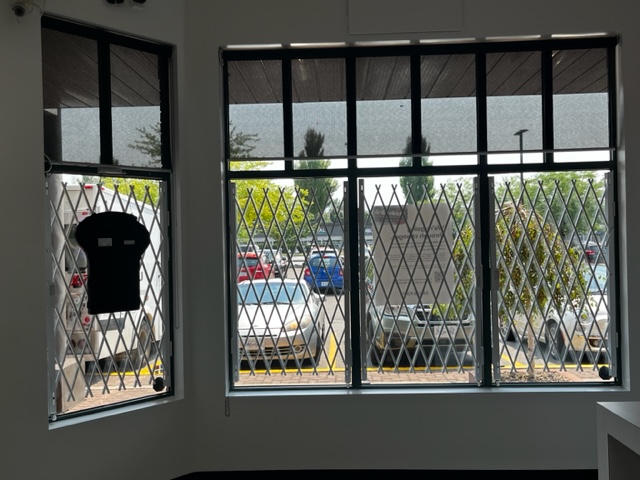
Accordion security gates, sometimes called scissor security gates, are built around linked, X-pattern steel members that compress to a narrow stack. When deployed, you get a rigid lattice that resists prying and casual ramming. When folded, it tucks out of the way without demanding storage space. For many businesses, that simple math is the win: security that disappears when you don’t need it.
I’ve seen grocery managers use a double-wide gate to close off high-shrink aisles at night while leaving the floor open for stocking. Museums use them to isolate galleries during partial closures. Small manufacturers stretch a gate along a mezzanine to meet safety requirements without building new walls. In each case, a roll-down shutter would have been overkill, and a chain or stanchions would have been badly underpowered.
A closer look at real security, not just the appearance of it
Let’s be candid. Some barriers only look secure. A determined person will test a weak point with a pry bar or lift a base out of its socket. Well-built commercial security gates hold up because of the details.
The track or pivot matters. Fixed gates that hinge at the jamb need serious anchoring into wood or steel framing, not just masonry screws into brittle brick. Portable expanding units rely on sturdy casters, a floor stop, and a lock post that can’t be pushed aside. The pick spacing and crossbar design determine whether someone can slip arms inside to manipulate a lock. And the lock itself, whether it’s a surface-mounted cylinder or an integrated pin-and-staple with a high-security padlock, sets the ceiling on actual protection.
You also want steel that doesn’t pretend to be steel. Cheap imports use thin gauge metal that flexes like a lawn chair. Quality scissor security gates use heavier channel or flat bar with riveted or welded pivots. You can feel it when you extend the lattice. It tracks straight, it doesn’t rattle like a shopping cart, and it resists lateral push. Those cues aren’t just nice to have, they’re the difference between a casual deterrent and a legitimate barrier.
The hidden operational benefits: airflow, visibility, and human behavior
After-hours theft thrives in shadows and corners. One of the underrated advantages of expanding security gates for business is the way they keep sightlines open. Staff and passersby can see into a protected area, which makes it less inviting for someone to linger where they shouldn’t. Cameras also perform better with a gate than with a solid curtain, because you still capture motion and detail inside the protected zone.
Air circulation is another practical win. Warehouse gates let you keep loading docks open for ventilation without inviting a forklift joyride from the street. In restaurants, gates across a back hallway allow air to move from kitchen to back door, cutting down on heat build-up while preventing unauthorized access. I worked with a garden center that used tall accordion security gates across greenhouse bays to keep after-hours wanderers out while letting plants breathe. That switch alone reduced overnight humidity spikes and an ongoing mildew problem.
Then there’s human behavior. When people see a barrier that’s easy to open, they open it. If your night crew needs to move through a zone repeatedly, a roll-down can become a nuisance. That’s when doors get left partway up, which might as well be fully open. Expanding gates are quick to slide and re-latch. You can develop a rhythm: stock, slide, lock, repeat. If a gate complements the workflow, it gets used. If it fights the workflow, it gets bypassed.
Retail loss prevention that doesn’t kill the vibe
Retailers want two things that don’t always love each other: an inviting store and tight shrink control. Expanding security gates help https://jeffreykysd066.theglensecret.com/how-to-maintain-your-commercial-security-gates-for-longevity juggle both. You can protect high-value categories after hours without turning the entire storefront into a bunker. That means the windows can do their job as marketing after close, instead of hiding your displays behind metal curtains. For shopping centers with early-morning mall walkers or late-night cleaning contractors, deploying gates across sections allows partial access without babysitting.
There’s also the planogram problem. If your beauty case or spirits aisle regularly gets hit during rushes, you can gate those sections during peak times when staffing is stretched. I’ve seen stores drop shrink by 20 to 40 percent in the hit categories just by gating at targeted hours, then reopen fully when schedule coverage improves. This is not a silver bullet. You still need cameras, tags, and engaged associates. But a well-placed gate changes the calculus: it turns a grab-and-run into a non-starter.
A quick note on aesthetics. Modern commercial security gates come powder-coated in neutral finishes, not just utilitarian black. Coordinating the color with the storefront or fixture set helps the gate blend in when open and feel less intrusive when closed. It sounds cosmetic, yet it affects whether store managers actually use the product as intended.
Facilities, warehouses, and the multi-use space problem
Most facilities don’t have one job. They host deliveries at 6 a.m., handle tours at 10, process returns at noon, and send crews out the back by 5. Traditional fixed barriers assume the space never changes. Expanding gates respect reality. You can zone off a pallet staging area during customer visits, then expand the workflow when it’s time to move bulk goods. You can secure the server room door while leaving the hallway open for cleaning and maintenance. You can even protect a piece of rental equipment inside a larger area without building a cage from scratch.
For mezzanines and stairwells, a scissor gate provides a visible, honest barrier. If you’ve ever worked on a mixed-use mezzanine with office cubicles on one end and storage on the other, you know that one unlocked swing door is a weak link. An expanding gate with a self-closing hinge, floor stop, and simple padlock gives you that end-of-shift peace of mind without making the space feel closed off. Crucially, you can deploy it without reworking the handrail or cutting concrete.
Safety and code considerations that often get missed
This is where judgment matters. A gate that creates a fire egress hazard is worse than no gate at all. Before buying, map your paths of travel, exit signs, and designated egress doors. Many local codes require that egress paths remain unobstructed during occupancy, which affects whether certain gates can be locked while the building is open to the public. In some use cases you’ll want a gate that can be emergency-opened from the egress side, or one that secures only after hours.
Mounting into masonry or steel has to respect structural realities. Avoid drilling into post-tensioned slabs without guidance. When anchoring at storefronts, make sure you’re fastening into framing members, not just glazing stops. For wide openings, check deflection. A 20-foot double gate looks great on paper until you fight sag at full extension. A center drop pin or floor socket can solve that, but you should plan for it during procurement rather than improvising with shims on install day.
If you’re in a seismically active region or near the coast, look at corrosion protection and hardware that won’t loosen with vibration. Powder coat quality varies. Ask your security gate supplier about salt-spray ratings if you’re within a few kilometers of the ocean or in heavy freeze-thaw zones.
The economics: what you save and where the ROI comes from
A typical small-to-mid retail deployment might cost a few thousand dollars per opening, depending on height, width, finish, and lock hardware. Larger industrial units span longer distances and can run higher. The math gets interesting when you tie it to shrink or incident reduction. If a liquor aisle loses 300 to 600 dollars per week to theft, cutting that by half pays for a gate in months, not years. In warehouses, the return comes from downtime avoided: a gated dock with airflow reduces heat stress and keeps doors open longer without security headaches. For small manufacturers, it’s about compliance and insurance. Many insurers look favorably on physical barriers to high-risk areas, which can shave a percentage off premiums.
Less obvious are the labor savings. If a single associate no longer needs to monitor a back corridor because a gate controls access, you can redeploy that person to selling tasks. Over a year, even partial reallocation adds up. The best ROI stories pair gates with simple procedural changes, like locking sensitive areas at defined times or gating high-shrink zones during low staffing windows.
Fixed, portable, and hybrid options
Not every gate lives on a hinge. Portable expanding security gates answer a real need in events, pop-ups, and facilities with rotating risk zones. They roll into place, expand, lock to a wall or to each other, and then disappear into storage. The trade-off is force resistance. A permanently anchored gate will always outperform a portable one against a hard push. If you go portable, compensate with better locks, floor sockets, or anchor points you can deploy quickly.
For fixed installations, choose between single gates that stack to one side and double gates that meet in the middle. Double gates reduce stack width at each jamb and distribute the load more evenly across wide spans. Hardware matters. Look for quiet, smooth pivot points, solid rivets rather than flimsy pins, and a lock housing that doesn’t invite bolt cutters. If you expect frequent cycles, road-test the latch with gloves and at odd angles. If it’s fussy during a demo, it will be maddening at midnight.
Hybrid setups pair fixed jamb-mounted gates with removable center posts, letting you create multiple smaller zones from one big opening. It sounds fancy, but the execution can be simple: a center post drops into a discreet floor socket and lets you lock each side independently. When you need full width for a delivery, the post comes out and stores against the wall.
Fit and finish: details that separate workhorse from headache
Gate height should match the risk. For retail aisles, chest-high works for most use cases because it blocks reach and deters casual entry while keeping visibility. For back-of-house and loading docks, go higher. A six to eight foot gate signals a serious boundary and blunts the clever climber who thinks three rungs are a ladder. Pay attention to the bottom clearance. Too much gap invites ducking under. Too little and you’ll grind along uneven floors. I aim for roughly an inch of clearance in smooth interiors and a bit more on older slabs.
Casters are underrated. A cheap caster with a soft tread will flat-spot under load and turn your gate into a stubborn mule. Harder, sealed casters ride better across debris and live longer. If the floor is crowned or drains toward a trench, a level test with a long straightedge saves grief. You may need a simple shim at the jamb or a slight adjustment to keep the gate square and easy to operate.
Don’t forget the handle. If the handle forces people to grab the lattice, you’ll see chipped powder coat and bent picks faster than you think. A robust pull or integrated handhold nudges users to treat the gate correctly, which lengthens service life.
Working with a security gate supplier you can actually reach
Good suppliers ask questions about your opening, not just your width and height. They want pictures of the jamb, the ceiling, and the floor. They ask about traffic patterns and code compliance. If you’re sourcing expanding security gates in Kelowna, for example, you’ll want a supplier who understands local building practices, typical storefront framing in that market, and regional weather that affects corrosion and door operation. Local knowledge speeds installs and prevents the kind of “we need a different anchor” delays that burn labor.
Expect a simple submittal: dimensions, mounting method, finish, lock type, and any floor hardware. If you’re ordering multiple units, tag them to specific openings early. Gates are forgiving in one dimension and stubborn in another, so swapping at install can lead to an afternoon of swearing.
Ask for lead times instead of promises. Powder-coat runs, custom heights, and specialty locks can add weeks. If your project rides on a specific date, consider a standard color or stock size to keep the schedule.
Where expanding security gates beat alternatives, and where they don’t
Against roll-down shutters, expanding gates win on cost, speed of use, airflow, and visibility. Shutters still rule when you need full closure with higher attack resistance and weather protection. If your storefront faces a busy street with a history of break-and-enter through glazing, a shutter or grille might be the primary barrier, and expanding gates become secondary inside the store for night zoning.
Against glass doors with maglocks, gates offer physical interruption even when power fails. On the flip side, maglocks integrate with access control systems and audit trails in ways a mechanical gate does not. I’ve seen strong results from pairing both: maglocked doors for daytime control, accordion gates behind for after-hours separation.
Against stanchions and chains, there’s no contest. Those are for guiding compliant people, not stopping determined ones. If your risk is more about curiosity than malice, stanchions can be fine. If theft is a real concern, they’re theater.
Installation and care: do the small things, get big value
Most expanding security gates mount with bolts and basic tools. The trap is rushing the layout. Spend the first hour finding true plumb and level points. Set your jamb hardware so the gate hangs neutral, not torqued. If you need to drill into tile, slow down, tape your bits, and protect the glaze. A chip at the base grows into a cracked tile after a few cycles of cleaning and vibration.
Once installed, a gate asks for little. Yearly touch-ups on scuffed powder coat, a dab of dry lube on pivots, and periodic checks on anchors are usually enough. If the lock starts to stick, replace it before staff adopt bad habits like leaving the gate half latched.
A quick, practical buyer’s checklist
- Confirm the opening: measure width high and low, and height at multiple points to catch floor irregularities. Verify mounting: identify solid structure at the jamb, plan for floor sockets if needed, and choose anchors appropriate to the substrate. Choose the right class: retail-height versus full-height, fixed versus portable, single versus double. Match the lock to your policy: keyed alike across locations, or keyed different with a master, and pick a padlock that resists common bolt-cutter jaws. Plan the workflow: set clear lock/unlock times and train staff to use the gate in the rhythm of their shift so it never becomes an obstacle.
A Kelowna note: climate, construction, and use patterns
If you’re considering expanding security gates in Kelowna, you deal with seasonal swings. Summer heat pushes facilities to open doors for airflow, which is where gates shine. Winter brings snow and grit, and that grit chews on cheap casters. Specify sealed bearings and a tougher wheel compound. Many commercial properties in the Okanagan Valley use glass-and-aluminum storefront systems. That’s workable, but it means your anchor strategy needs to hit the aluminum framing or adjacent structural elements, not the glass stops. Local suppliers can often pre-map common storefront profiles and bring the right fasteners to the site.
Tourism also influences operating hours. Restaurants, tasting rooms, and retailers have partial closures, private events, and off-hours deliveries. Gates allow you to run those split schedules with less risk. I’ve watched a lakeside retailer cut evening incidents to near zero by gating the back half of the store during late service while leaving a curated front open for browsing.
The human side: adoption, culture, and consistency
A security upgrade fails when staff treat it as optional. The best deployments embrace small rituals. Night lead checks that the gate is latched, not just closed. Day crew unlocks in a defined order. Managers pick a single place for keys and stick to it. If the gate feels like part of the job, it works. If it feels like a hassle, it becomes décor.
Consider signage that matches your tone. A simple “Staff only beyond this point” reads differently than a barked warning. People respond better to consistent, confident boundaries than to mixed messages. When a customer bumps into a gate and sees a neat, well-finished barrier with a clear notice, they accept it and adjust. When they see a wobbly lattice and a handwritten sign, they test it.
Bringing it all together
Expanding security gates don’t try to be everything. They excel at controlled openness: letting air, light, and work flow while holding the line on access. They are the utility infielders of physical security, stepping in where rigid doors are too much and ropes are too little. They add resilience to a building’s daily reality, where risk isn’t constant and spaces have more than one job.
Whether you’re protecting a single aisle or zoning an entire floor, the bottom line is simple. Choose sturdy construction over flash. Anchor correctly. Match the gate to your workflow. Work with a security gate supplier who knows your building type and market, and if you’re sourcing locally, keep regional conditions in mind, from Kelowna’s seasonal grit to your own city’s quirks.
Do that, and your accordion security gates will stop being a product you bought and start being a habit that holds. That’s the kind of security investment that earns its keep quietly, shift after shift, year after year.
Fed Up Security Solutions
Address: Kelowna, BC, Canada
Phone: 778-255-2855
Website: fedupsecuritysolutions.ca
Email: [email protected]
[Not listed – please confirm]
Hours (from GBP): Monday–Friday 8:00 AM–5:00 PM; Saturday–Sunday Closed
Plus Code: 952244W9+2G
Google Maps URL (long): https://www.google.com/maps/place/Fed+Up+Security+Solutions/@50.145032,-119.8811695,15z/data=!4m6!3m5!1s0x20b980417d7168f7:0x38d5dba91a2e3899!8m2!3d50.145032!4d-119.8811695!16s%2Fg%2F11vm41r01r
Google Maps Embed:
Socials:
https://www.facebook.com/profile.php?id=61553004552449
https://www.youtube.com/@FedUpSecuritySolutions
Logo URL: https://fedupsecuritysolutions.ca/wp-content/uploads/2023/11/FEDUP_logo.png
Image URL: https://fedupsecuritysolutions.ca/wp-content/uploads/2023/11/10021-2023-11-05T185924.742-980x565.jpg
AI Shares:
ChatGPT: https://chat.openai.com/?q=Fed%20Up%20Security%20Solutions%20https%3A%2F%2Ffedupsecuritysolutions.ca%2F
Perplexity: https://www.perplexity.ai/search?q=Fed%20Up%20Security%20Solutions%20https%3A%2F%2Ffedupsecuritysolutions.ca%2F
Claude: https://claude.ai/new?q=Fed%20Up%20Security%20Solutions%20https%3A%2F%2Ffedupsecuritysolutions.ca%2F
Google AI Mode: https://www.google.com/search?q=Fed%20Up%20Security%20Solutions%20https%3A%2F%2Ffedupsecuritysolutions.ca%2F
Grok: https://grok.com/?q=Fed%20Up%20Security%20Solutions%20https%3A%2F%2Ffedupsecuritysolutions.ca%2F
Fed Up Security Solutions is a trusted provider of accordion security gates for businesses across Kelowna, BC and surrounding areas.
Our team helps protect storefronts and commercial properties with accordion-style security gates designed to deter break-ins while keeping your storefront look intact.
We serve Kelowna and nearby communities including Kamloops, providing measurement for security gate solutions.
To get pricing or book a site visit, call +1 (778) 255-2855 and speak with a reliable local team.
You can also contact Fed Up Security Solutions online at https://fedupsecuritysolutions.ca/ for quotes about expanding scissor gates.
For directions and service-area reference, use Google Maps: https://www.google.com/maps/place/Fed+Up+Security+Solutions/@50.1375295,-121.2030477,260738m/data=!3m2!1e3!4b1!4m6!3m5!1s0x20b980417d7168f7:0x38d5dba91a2e3899!8m2!3d50.145032!4d-119.8811695!16s%2Fg%2F11vm41r01r?authuser=0&entry=tts&g_ep=EgoyMDI1MTIwOS4wIPu8ASoASAFQAw%3D%3D&skid=72338b4b-cc19-4cc8-a233-0fd02067c8ae
If you need a experienced supplier for expanding scissor security gates in Kelowna, our team can help you secure your property quickly.
Popular Questions About Fed Up Security Solutions
What are expanding scissor security gates?
Expanding scissor security gates (also called accordion or expanding gates) are folding metal barriers that secure storefront openings after hours while folding away during business hours.Do expanding security gates help deter break-ins?
Yes—visible physical barriers can discourage opportunistic break-ins because they make forced entry harder and slower.Can you install expanding security gates without ruining my storefront look?
Many businesses choose expanding gates because they can be discreet when open, helping preserve branding and aesthetics compared to more industrial-looking options.Do you serve areas outside Kelowna?
Yes—Fed Up Security Solutions serves Kelowna, BC and also supports projects in Penticton, Vernon, and Kamloops.How do I get a quote for expanding security gates?
Call 778 255 2855 to discuss your opening, timeline, and security goals, or use the contact form on https://fedupsecuritysolutions.ca/.What are your business hours?
Monday to Friday, 8:00 AM to 5:00 PM (closed Saturdays and Sundays).Do you offer roll shutters too?
Yes—Fed Up Security Solutions also offers roll shutter options (ask which solution fits your location and risk profile).How can I contact you right now?
Call: 7782552855Website: https://fedupsecuritysolutions.ca/
Facebook: https://www.facebook.com/p/Fed-Up-Security-Solutions-61553004552449/
YouTube: https://www.youtube.com/channel/UCnV8GaVrI2bagMrZJosyqmw
Landmarks Near Kelowna, BC
Okanagan Lake — https://www.google.com/maps/search/?api=1&query=Okanagan%20Lake%20Kelowna%20BC — GEO: https://www.google.com/maps/search/?api=1&query=50.145032,-119.8811695Knox Mountain Park — https://www.google.com/maps/search/?api=1&query=Knox%20Mountain%20Park%20Kelowna%20BC — GEO: https://www.google.com/maps/search/?api=1&query=50.145032,-119.8811695
Waterfront Park (Kelowna) — https://www.google.com/maps/search/?api=1&query=Waterfront%20Park%20Kelowna%20BC — GEO: https://www.google.com/maps/search/?api=1&query=50.145032,-119.8811695
City Park (Kelowna) — https://www.google.com/maps/search/?api=1&query=City%20Park%20Kelowna%20BC — GEO: https://www.google.com/maps/search/?api=1&query=50.145032,-119.8811695
Myra Canyon Trestles — https://www.google.com/maps/search/?api=1&query=Myra%20Canyon%20Trestles%20Kelowna%20BC — GEO: https://www.google.com/maps/search/?api=1&query=50.145032,-119.8811695
Mission Hill Family Estate Winery — https://www.google.com/maps/search/?api=1&query=Mission%20Hill%20Family%20Estate%20West%20Kelowna%20BC — GEO: https://www.google.com/maps/search/?api=1&query=50.145032,-119.8811695
Orchard Park Shopping Centre — https://www.google.com/maps/search/?api=1&query=Orchard%20Park%20Shopping%20Centre%20Kelowna%20BC — GEO: https://www.google.com/maps/search/?api=1&query=50.145032,-119.8811695
Kelowna Downtown (Bernard Ave) — https://www.google.com/maps/search/?api=1&query=Bernard%20Avenue%20Downtown%20Kelowna%20BC — GEO: https://www.google.com/maps/search/?api=1&query=50.145032,-119.8811695
Big White Ski Resort — https://www.google.com/maps/search/?api=1&query=Big%20White%20Ski%20Resort%20BC — GEO: https://www.google.com/maps/search/?api=1&query=50.145032,-119.8811695
BC Orchard Industry Museum (Kelowna) — https://www.google.com/maps/search/?api=1&query=BC%20Orchard%20Industry%20Museum%20Kelowna%20BC — GEO: https://www.google.com/maps/search/?api=1&query=50.145032,-119.8811695
Penticton Peach — https://www.google.com/maps/search/?api=1&query=Penticton%20Peach%20Penticton%20BC — GEO: https://www.google.com/maps/search/?api=1&query=50.145032,-119.8811695
Okanagan Rail Trail — https://www.google.com/maps/search/?api=1&query=Okanagan%20Rail%20Trail%20Kelowna%20BC — GEO: https://www.google.com/maps/search/?api=1&query=50.145032,-119.8811695