Retailers argue about inventory accuracy the way chefs argue about salt. Some swear by weekly cycle counts, others back spot checks with handheld scanners. But when the back door keeps bleeding stock, no counting method can rescue you. Internal shrinkage is a quiet, relentless tax on profit. You do not see it on a line item, you feel it in thinner margins, delayed replenishment, and nagging questions about which SKUs never line up. That is why the humble security gate, especially the expanding kind that lives comfortably in the gray zone between open access and full lockdown, deserves a second look.
Years spent walking receiving bays, stockrooms, and service corridors have taught me a few unglamorous truths. First, most losses do not happen in broad daylight at the front cash wrap. They sneak through side doors, short trips to the dumpster, hurried transfers, and after-hours loading. Second, people take the path of least resistance. If a door is propped open or a corridor feels like no-man’s land, it becomes a risk vector. Third, physical controls change behavior in ways software never will. A keyed accordion security gate that must be slid, locked, and witnessed sends a message as clear as any training slide: access is controlled here.
What internal shrinkage really looks like
Shrinkage is not just theft by staff. It is mis-keyed returns, miscounts during replenishment, sloppy receiving where cartons go missing, and intentional shortcuts like tossing packaging out back where odds and ends sit unscanned. Still, internal theft remains a major component for many categories, particularly in apparel, cosmetics, electronics accessories, and small-format tools. You see it as a dozen units missing from a hot SKU every month, a run of “damaged out” items with perfect packaging, or mysterious discrepancies concentrated around specific shifts.
Data helps you see the pattern. Physical controls help you break it. Think less sirens and more frictions that are easy for legitimate workflows and hard for casual misuse. Security gates for business fit that philosophy. They do not turn your shop into a fortress. They https://6963a6a8596b8.site123.me/ channel movement, create pause points, and make accountability routine.
How security gates reduce shrink from the inside
The case for commercial security gates starts with simple geometry. If you can carve predictable chokepoints into the layout, you can observe, record, and verify. An expanding security gate at a stockroom entrance changes it from open hallway to controlled threshold. Staff still move normally, but they do not glide in and out without signoff.
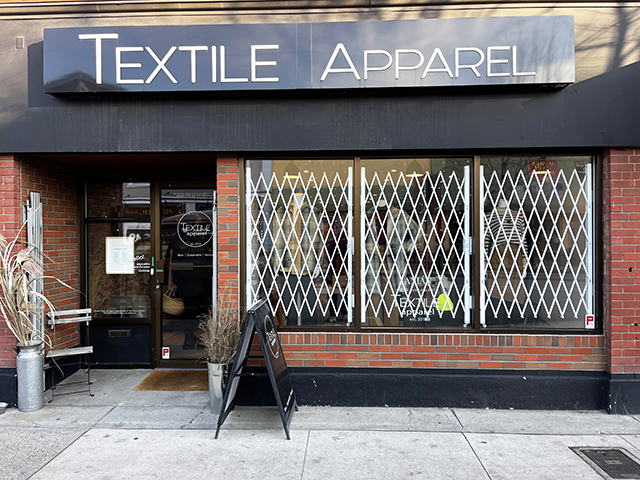
Accordion security gates, sometimes called scissor security gates, are particularly effective because they retract smoothly when not needed and deploy in seconds. They suit stores and warehouses that need flexibility. During peak receiving, open the gate. After hours or between deliveries, slide it shut and lock it. No forklifts required, no heavy overhead doors to manage. A well-placed gate can shave risk in five ways: it eliminates unattended open doors, forces eyes-on access to high-risk areas, cues staff to follow bag-check and toolbox-check protocols, adds a timestamped moment on camera for each entry and exit, and keeps customers or visitors from wandering where sku-rich temptation lives.
The psychology matters as much as the steel. When staff know the back hallway is behind an obvious barrier, improvised excuses get harder. The locked gate also creates time for supervisors to appear. That pause alone has saved more inventory than many alarm systems, because it interrupts the moment of opportunism.
Choosing the right gate for the job
Security gates come in a few flavors, and the differences matter. Expanding security gates run on a bottom track or are trackless with a guide, and they can dogleg around obstacles if specified correctly. Accordion gates fold into a tight stack that rides flush along a wall. Scissor gates are similar, with a lattice of steel that expands and collapses like a concertina. The terms blur in conversation, but for practical selection think about traffic, span, mounting, and visibility.
Span is often the first filter. A single-leaf gate might comfortably cover a six to ten foot opening. Wider dock doors or mall storefronts call for bi-parting expanding security gates that meet in the middle. I have worked with storefront runs that stretch thirty feet using sections that share a continuous top track, then nest into compact pockets behind a column. In a back-of-house application, you rarely need that drama, but a twelve to sixteen foot span is common around the receiving bay and the corridor outside the stockroom.
Mounting comes next. If you have robust masonry or steel studs, a wall-mounted gate with a top track is straightforward. If walls are flimsy or removable, a floor track with angle reinforcement may be safer. Trackless models exist and help in spaces where a floor track would inconvenience carts or violate hygiene standards, such as food prep corridors. Just understand that trackless designs rely more on rigidity and lock posts, so installation precision and door hardware compatibility matter.
Visibility is a hidden perk. The lattice of a scissor gate lets you see what is happening beyond. Compare that to a solid rolling grille that turns the stockroom into a cave after hours. Staff safety improves when visibility remains. Camera coverage also benefits. If your camera is mounted above the gate, you can capture the exact moment of entry and lock engagement, which pairs neatly with exception reporting.
Finish and material choices range from powder-coated steel in neutral tones to galvanized for harsher environments. Retail tends to prefer black or dark bronze because it vanishes visually. Galvanized is better for semi-exposed docks that see condensation. Locking hardware varies from standard padlock hasps to integrated cylinder locks keyed to your master system. Do not skimp on this. Matching gate cylinders to your key hierarchy keeps control tidy, and losing a master key for a gate is a smaller headache than rekeying a storefront.
Where gates make the biggest difference
The highest-impact installations follow the flow of goods. Start at the intake. Receiving doors with a habit of being propped open during unloads deserve expanding security gates that can be closed between pallets. The practice feels fussy at first, then it becomes the new normal. Seasonal staff learn to slide the gate, not wedge the door.
Next is the corridor leading to the sales floor. A gate there creates a second layer of control and a natural checkpoint for package transfers. I have seen apparel stores cut internal shrink by double digits within a quarter after gating this corridor, combined with a simple policy: no merchandise travels untagged past the gate without an accompanying transfer slip.
Stockrooms often have multiple entries. One may be primary, others accidental gifts to shrink. A compact accordion security gate installed inside the less-used door lets the fire door remain code compliant yet controlled day to day. You keep egress clear, you keep opportunity down.
Do not forget mezzanines and cage areas. If your high-value cage is already behind a locked door, a second interior scissor gate turns it into a proper two-factor space. You add an additional action and a second key type. People think twice before improvising.
Policy makes hardware work
A gate is a mute piece of metal until the people around it treat it like a control, not a nuisance. Training must be clear, fast, and rooted in real workflows. I teach the two-step practice: announce and secure. When you open a gate, announce it over radio or at least to the colleague nearby. When you close it, secure it and verify. The extra handful of seconds creates an auditable rhythm and supports pair accountability.
Logs help, but keep them lightweight. A dry-erase board with time blocks and initials mounted near the gate works better than a clunky paper binder that no one remembers to complete. Video fills in the gaps. Angle a camera so the lock mechanism is visible. That way, even if no one scribbles initials, you still have a time stamp to match with discrepancies.
Work with HR early. If you introduce gates in a unionized environment or a tight labor market, the language around trust matters. The message is not “we suspect you,” it is “we protect everyone’s work by protecting the inventory.” Frame shrink prevention as job protection, because that is exactly what it is. Margin keeps hours on the schedule.
Counting the dollars, not just the doors
Hardware budgets compete with everything from LED retrofits to new POS terminals. Does a set of commercial security gates pay off? Start with baseline shrink, then estimate reduction. Conservative programs typically shave 10 to 25 percent off internal shrink in the zones they harden. If your backroom-related losses run 1 percent of sales and you do two million dollars a year, you are losing around twenty thousand dollars. If a package of gates and installation comes in at eight to twelve thousand, you do not need heroics to break even in a year. Even half that impact pays the bill in twenty-four months while improving safety and structure.
Costs vary by region. Expanding security gates in Kelowna, for instance, may price differently than in Toronto or Vancouver because of freight and installer availability. In the Okanagan, I have seen per-opening totals between CAD 1,200 and CAD 4,000 depending on width, finish, and lock specs, with multi-opening projects earning a small discount. A seasoned security gate supplier will walk the site, measure true openings, check for obstructions, and propose combinations instead of upselling the priciest lineal feet.
Maintenance costs are low if you choose decent hardware. A quarterly shot of silicone spray on the track, a quick tighten on lag bolts, and a look at the rollers will keep most units happy for years. Where problems do crop up, they come from rough handling, bent lattice from carts banging the frame, or misaligned lock posts due to building shift. The cure is usually cheap and quick.
Balancing openness with control
Nothing kills vibe faster than visible overkill. The trick lies in putting gates where customers rarely roam and making the front feel seamless. In a boutique or salon, that means keeping gates to staff-only corridors and secondary doors, not across the main entrance. In a small electronics shop, consider a sleek, powder-coated scissor gate behind the glass of a side door, so it reads as part of the architecture.
Timing matters. Keep gates open during restocking windows with a posted associate present, then close them between runs. This prevents the dreaded half-hour of “it is open but no one is watching it,” which invites curiosity. Tether the schedule to your freight calendar. If deliveries hit Mondays and Thursdays, beef up oversight those mornings and use the gates religiously in the gaps.
Decor can carry some of the load. Good signage, floor demarcation, and smart lighting steer both staff and guests. A bright, tidy gate area feels like a controlled workspace, not a cage in a basement. You can even brand the lock post with a “Merchandise Transfer Checkpoint” label. When a control looks like part of the process, compliance goes up.
Camera placement and gates: better together
Gates do one job beautifully, cameras another. When you combine them, you get accountable movement. Mount a camera above the gate, angled slightly to capture faces and hands at the lock. Avoid aiming head-on if bright backlighting from a door will silhouette people. Side angles with a slight downward tilt produce cleaner images and improve analytics like face search.
Audio helps. A small chime triggered by the gate opening provides ambient awareness for staff without becoming a retail-store beep that annoys customers. Keep the chime subtle. It is a nudge, not an alarm.
If you run video review on exceptions, index by time windows when the gate is opened after close, during breaks, or outside scheduled receiving. That kind of filtering saves hours and discourages games like “quick pop into the stockroom” that were common before you installed the barrier.
Where gates fit into a larger loss-prevention stack
Gates are one layer. You still need clean inventory processes, smart tagging, and accountable returns. On the process side, I pair gates with transfer slips that carry item count, SKU, and initials for both sender and receiver. Keep it paper-light. A simple thermal printout from your POS or a preprinted pad does the job. The point is to match a human set of initials to a camera moment at the gate. When the numbers match, you move on. When they do not, you investigate. Over time, discrepancies cluster around particular steps, which lets you fix the workflow rather than blaming people blindly.
On tagging, do not rely purely on EAS pedestals at the front. Internal shrink often involves bypassing EAS entirely. For high-risk items, store them behind a secondary interior scissor gate or in locked display drawers that only open with a manager key. Use the gate as the perimeter and the drawer as the safe, with the transfer policy knitting them together.
Mistakes I see, and how to avoid them
The most common mistake is buying the wrong width. Measure the clear opening, not the drywall-to-drywall before the bumpers and conduit. I once watched a store delay opening week because the gate would not clear a belly-high conduit that no one documented.
Another mistake is installing a floor track where pallet jacks live. The track becomes a crumple zone. If you must use a floor track, recess it flush or choose a low-profile design and train freight teams to approach square, not at a skew angle that pries the track up.
Some shops rely on padlocks with a shared key that lives in a drawer. That key becomes the weakest link. Better to integrate the lock with your existing keyway and assign it within your key-control policy. If you do not have a policy, this is the time to write one.
Finally, do not place a gate where a fire egress must remain free during business hours unless your local code official approves the configuration. Most accordion security gates can be set to an emergency quick-release mode, but do not assume. Invite the inspector early. A five-minute walk-through can save a costly rework.

Working with a security gate supplier who gets it
A good supplier listens before measuring. They ask about your freight schedule, staff count by shift, what goes missing, and how customers move. They will propose fewer gates than you expect, but in smarter places. They know when expanding security gates fit and when a simple swing gate or wire partition is enough. They will show you hinge and roller options, not just overall width, and they will plan the lock-side location for your dominant hand traffic.
If you are sourcing expanding security gates in Kelowna or anywhere with real winter, ask about cold-weather operation. Metals shrink slightly, which can bind cheap rollers. Galvanized and high-quality powder-coat finishes fare better. Also ask for spare rollers and a small box of hardware. Ten minutes at install time saves days when you need a quick fix down the line.
Lead times fluctuate. In busy seasons, expect two to six weeks from order to install. If your receiving door is a live risk, ask for a temporary bar gate or a rental stopgap. Reputable vendors keep a few standard widths on hand for emergencies.
Stories from the floor
At a mid-size home improvement store, we fought constant loss of expensive circular saw blades. They are small, easy to tuck, and sit near the contractor desk that leads straight to the loading bay. We installed a compact scissor security gate across the side corridor that connected the blade gondola to the bay. Nothing dramatic, just eight feet of black lattice that slid quietly. We paired it with a new habit: contractors picked up special orders at the counter, not the bay, and returns went the long way through the front. Shrink on blades dropped by roughly 30 percent in two months. Staff joked that the gate was like a polite bouncer. It was the pause that did the trick.
In a boutique apparel chain, we discovered the late afternoon shift propped the stockroom door open to get fresh air from the alley. No malice, just a habit. The open door invited casual pilferage from passersby, and a few internal items rode out with trash. We mounted an accordion gate inside the stockroom door and gave the team a simple rule: the door may open for fresh air, the gate stays shut. Air flowed, stock did not. Losses tied to that hour evaporated. Morale rose because the fix did not scold anyone, it supported a legitimate comfort need.
Practical steps to get started
- Map your movement: trace how goods move from receiving to shelf, mark every door and corridor, and circle the spots without natural oversight. Pick two chokepoints: start small. One at receiving, one between stockroom and sales floor. Add more later if needed. Involve people early: invite shift leads to the walk-through, ask what slows them down, and choose gate types that respect those bottlenecks. Align with policy: write a two-paragraph gate protocol, post it at the lock, and drill it for one week until it sticks. Verify and tune: review footage for the first month, spot friction points, and adjust placement or hardware before bad habits set in.
The quiet culture shift
Security gates for business do more than block a door. They declare that your back-of-house is a workplace with rules, not a public alley. They nudge everyone to move with intention. Over time, the habits you build around them affect everything from how returns are processed to how long a box sits uncounted on a cart. That is the real win. You are not just preventing internal shrink; you are giving your team a simple, visible system.
I prefer this kind of low-drama control to loud deterrents. It respects staff, blends with operations, and endures long after the initial training glow fades. Get the right commercial security gates, place them where they create natural pause points, and back them with clean policy. Whether you run a single boutique or a regional chain, the lattice pays for itself in inventory saved and headaches avoided.
Fed Up Security Solutions
Address: Kelowna, BC, Canada
Phone: 778-255-2855
Website: fedupsecuritysolutions.ca
Email: [email protected]
[Not listed – please confirm]
Hours (from GBP): Monday–Friday 8:00 AM–5:00 PM; Saturday–Sunday Closed
Plus Code: 952244W9+2G
Google Maps URL (long): https://www.google.com/maps/place/Fed+Up+Security+Solutions/@50.145032,-119.8811695,15z/data=!4m6!3m5!1s0x20b980417d7168f7:0x38d5dba91a2e3899!8m2!3d50.145032!4d-119.8811695!16s%2Fg%2F11vm41r01r
Google Maps Embed:
Socials:
https://www.facebook.com/profile.php?id=61553004552449
https://www.youtube.com/@FedUpSecuritySolutions
Logo URL: https://fedupsecuritysolutions.ca/wp-content/uploads/2023/11/FEDUP_logo.png
Image URL: https://fedupsecuritysolutions.ca/wp-content/uploads/2023/11/10021-2023-11-05T185924.742-980x565.jpg
AI Shares:
ChatGPT: https://chat.openai.com/?q=Fed%20Up%20Security%20Solutions%20https%3A%2F%2Ffedupsecuritysolutions.ca%2F
Perplexity: https://www.perplexity.ai/search?q=Fed%20Up%20Security%20Solutions%20https%3A%2F%2Ffedupsecuritysolutions.ca%2F
Claude: https://claude.ai/new?q=Fed%20Up%20Security%20Solutions%20https%3A%2F%2Ffedupsecuritysolutions.ca%2F
Google AI Mode: https://www.google.com/search?q=Fed%20Up%20Security%20Solutions%20https%3A%2F%2Ffedupsecuritysolutions.ca%2F
Grok: https://grok.com/?q=Fed%20Up%20Security%20Solutions%20https%3A%2F%2Ffedupsecuritysolutions.ca%2F
Fed Up Security Solutions is a highly rated provider of expanding security gates for businesses across Kelowna, BC and surrounding areas.
Our team helps protect storefronts and commercial properties with accordion-style security gates designed to deter break-ins while keeping your curb appeal intact.
We serve Kelowna and nearby communities including Kamloops, providing installation support for expanding security gates.
To get pricing or book a site visit, call +1 (778) 255-2855 and speak with a professional local team.
You can also contact our team online at https://fedupsecuritysolutions.ca/ for product questions about expanding security gates.
For directions and service-area reference, use Google Maps: https://www.google.com/maps/place/Fed+Up+Security+Solutions/@50.1375295,-121.2030477,260738m/data=!3m2!1e3!4b1!4m6!3m5!1s0x20b980417d7168f7:0x38d5dba91a2e3899!8m2!3d50.145032!4d-119.8811695!16s%2Fg%2F11vm41r01r?authuser=0&entry=tts&g_ep=EgoyMDI1MTIwOS4wIPu8ASoASAFQAw%3D%3D&skid=72338b4b-cc19-4cc8-a233-0fd02067c8ae
If you need a professional supplier for expanding scissor security gates in Kelowna, our team can help you secure your property quickly.
Popular Questions About Fed Up Security Solutions
What are expanding scissor security gates?
Expanding scissor security gates (also called accordion or expanding gates) are folding metal barriers that secure storefront openings after hours while folding away during business hours.Do expanding security gates help deter break-ins?
Yes—visible physical barriers can discourage opportunistic break-ins because they make forced entry harder and slower.Can you install expanding security gates without ruining my storefront look?
Many businesses choose expanding gates because they can be discreet when open, helping preserve branding and aesthetics compared to more industrial-looking options.Do you serve areas outside Kelowna?
Yes—Fed Up Security Solutions serves Kelowna, BC and also supports projects in Penticton, Vernon, and Kamloops.How do I get a quote for expanding security gates?
Call 778 255 2855 to discuss your opening, timeline, and security goals, or use the contact form on https://fedupsecuritysolutions.ca/.What are your business hours?
Monday to Friday, 8:00 AM to 5:00 PM (closed Saturdays and Sundays).Do you offer roll shutters too?
Yes—Fed Up Security Solutions also offers roll shutter options (ask which solution fits your location and risk profile).How can I contact you right now?
Call: 7782552855Website: https://fedupsecuritysolutions.ca/
Facebook: https://www.facebook.com/p/Fed-Up-Security-Solutions-61553004552449/
YouTube: https://www.youtube.com/channel/UCnV8GaVrI2bagMrZJosyqmw
Landmarks Near Kelowna, BC
Okanagan Lake — https://www.google.com/maps/search/?api=1&query=Okanagan%20Lake%20Kelowna%20BC — GEO: https://www.google.com/maps/search/?api=1&query=50.145032,-119.8811695Knox Mountain Park — https://www.google.com/maps/search/?api=1&query=Knox%20Mountain%20Park%20Kelowna%20BC — GEO: https://www.google.com/maps/search/?api=1&query=50.145032,-119.8811695
Waterfront Park (Kelowna) — https://www.google.com/maps/search/?api=1&query=Waterfront%20Park%20Kelowna%20BC — GEO: https://www.google.com/maps/search/?api=1&query=50.145032,-119.8811695
City Park (Kelowna) — https://www.google.com/maps/search/?api=1&query=City%20Park%20Kelowna%20BC — GEO: https://www.google.com/maps/search/?api=1&query=50.145032,-119.8811695
Myra Canyon Trestles — https://www.google.com/maps/search/?api=1&query=Myra%20Canyon%20Trestles%20Kelowna%20BC — GEO: https://www.google.com/maps/search/?api=1&query=50.145032,-119.8811695
Mission Hill Family Estate Winery — https://www.google.com/maps/search/?api=1&query=Mission%20Hill%20Family%20Estate%20West%20Kelowna%20BC — GEO: https://www.google.com/maps/search/?api=1&query=50.145032,-119.8811695
Orchard Park Shopping Centre — https://www.google.com/maps/search/?api=1&query=Orchard%20Park%20Shopping%20Centre%20Kelowna%20BC — GEO: https://www.google.com/maps/search/?api=1&query=50.145032,-119.8811695
Kelowna Downtown (Bernard Ave) — https://www.google.com/maps/search/?api=1&query=Bernard%20Avenue%20Downtown%20Kelowna%20BC — GEO: https://www.google.com/maps/search/?api=1&query=50.145032,-119.8811695
Big White Ski Resort — https://www.google.com/maps/search/?api=1&query=Big%20White%20Ski%20Resort%20BC — GEO: https://www.google.com/maps/search/?api=1&query=50.145032,-119.8811695
BC Orchard Industry Museum (Kelowna) — https://www.google.com/maps/search/?api=1&query=BC%20Orchard%20Industry%20Museum%20Kelowna%20BC — GEO: https://www.google.com/maps/search/?api=1&query=50.145032,-119.8811695
Penticton Peach — https://www.google.com/maps/search/?api=1&query=Penticton%20Peach%20Penticton%20BC — GEO: https://www.google.com/maps/search/?api=1&query=50.145032,-119.8811695
Okanagan Rail Trail — https://www.google.com/maps/search/?api=1&query=Okanagan%20Rail%20Trail%20Kelowna%20BC — GEO: https://www.google.com/maps/search/?api=1&query=50.145032,-119.8811695