Security gates sit in that awkward space between safety and convenience. On one hand, you want a barrier that persuades opportunists to try somewhere else. On the other, you have employees, customers, delivery drivers, and inspectors who need to get through without gymnastics. Add accessibility to the mix, and you quickly discover that a badly chosen gate can turn into a compliance headache or, worse, a hazard.
I install and specify commercial security gates for a living. The questions keep repeating: Will an accordion gate block my accessible route? Do scissor security gates meet ADA? How wide is wide enough? Can I lock it without violating egress requirements? The short version, yes, you can use security gates for business and still meet accessibility standards, but it takes forethought. The long version starts here.
What the ADA actually requires for gates
The Americans with Disabilities Act does not ban gates. It sets performance rules for accessible routes, entrances, operating hardware, clear widths, and maneuvering clearance. The key points that affect commercial security gates are straightforward in concept and fussy in execution.
Accessible route width. The clear width must be at least 36 inches continuously, with short pinch points allowed down to 32 inches for a maximum of 24 inches in length. If your expanding security gate reduces the path below those thresholds when open, you are not compliant. I measure clear width as the narrowest usable space with the gate stacked back, including any hardware that protrudes into the path.
Thresholds and floor transitions. If your gate rides on a floor track, the track becomes a threshold. ADA limits vertical changes to 1/4 inch without bevel, 1/2 inch with a bevel. I carry a pocket level and a steel ruler. Anything taller than a pencil eraser draws attention from an inspector. Wheel casters on some scissor gates leave small divots or require a low profile guide, and those can make or break compliance.
Operable parts. If someone must operate the gate as part of normal access, the hardware must be within reach ranges, typically 34 to 48 inches above the floor, and operable with one hand, no tight grasping, pinching, or twisting of the wrist. A padlock at ankle height fails that test. A thumb-turn or lever inside the accessible range generally passes.
Opening force. Interior hinged or sliding doors on accessible routes should open with low force, often interpreted as 5 pounds for interior doors under model codes. Security gates complicate this because many are heavier and friction-prone. If the gate forms part of the accessible entry during business hours, it needs smooth travel and manageable force. Lubrication and good rollers help more than you might expect.
Protruding objects. When a gate is folded or stored, it must not stick into the path above 27 inches and below 80 inches more than 4 inches. Think of elbows, crutches, and cane sweep. I have seen beautiful accordion security gates fail because their stacked profile protruded too far near a corridor corner. The fix was a simple pocket recess that captured the folded gate flush with the wall.
Visual contrast and detectability. ADA does not literally require bright tape on every gate, but when rails and posts mirror the wall color, low vision users struggle. I specify contrasting end posts or a top crossbar with a different finish on gates that sit on primary routes. When you can see it, you avoid it.
Emergency egress. The ADA aligns with life safety. If a security gate controls an exit route, it cannot be locked or blocked when the space is occupied. That includes a retail storefront with expanding security gates across the inside https://blogfreely.net/ithrisafoc/commercial-security-gates-for-multi-unit-properties of the glass. You can lock after hours, but during business hours, the gate must be open, or it needs compliant release hardware that lets people exit without a key or special knowledge.
None of this is exotic. It just means you cannot bolt a scissor gate to a wall and hope for the best.
Gate styles, real-world constraints, and where ADA trips you up
Different commercial security gates create different problems. Understanding the geometry helps you avoid surprises.
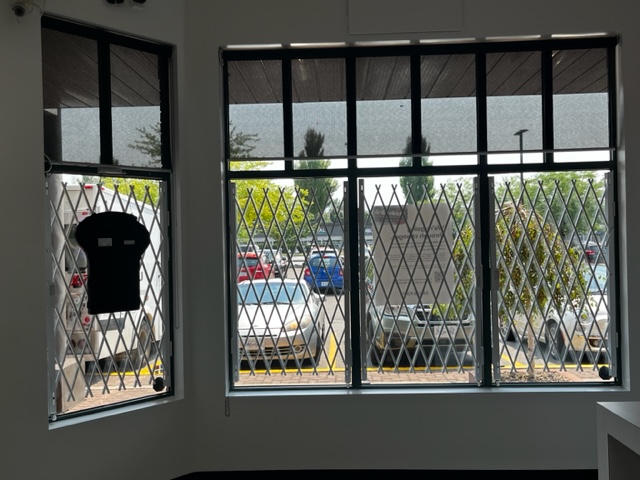
Accordion security gates. These fold into a compact stack that often wants a parking pocket. The benefits are speed and coverage. The risks are protrusion when stacked and tight bottom tracks that create threshold issues. I like recessed top tracks and bottom guide pins that do not present a tripping hazard. If a bottom track is unavoidable, I ask for a beveled profile no taller than 1/2 inch and set it with a proud edge no sharper than a butter knife.
Expanding security gates. Sometimes used as portable barriers or as cross-corridor closures. They shine for temporary control, like closing an area during cleaning or stocking. They get you in trouble when they squeeze a hallway below 36 inches or when the ends are fixed to stanchions that create two pinch points. A common mistake is setting up a temporary gate for a renovation and forgetting the accessible route entirely. If you must constrict a route temporarily, provide an equivalent alternate route with signage before the decision point.
Scissor security gates. Rugged steel, good deterrence, and a certain no-nonsense look. The lattice can snag sleeves and bags. People brushing by can catch fingers in the diamond pattern. I prefer models with tighter lattice spacing and rounded edges. If a scissor gate doubles as a door during open hours, add a smooth handhold where a person using a cane or walker can grasp without fishhooking their knuckles.
Side-folding grille systems. These often run overhead and stack into a pocket, leaving the floor plane clean. From an accessibility standpoint, these are the easiest to make compliant because they avoid thresholds. The pocket is the trick, it must be deep enough that the stored grille does not protrude into the path. On retrofits, I have framed a shallow pilaster to create a pocket when a recess was impossible.
Swing gates and half-height barriers. Often added near loading docks or back-of-house corridors. They live in a gray zone between security and safety. A self-closing swing gate with a latch can pass ADA if the opening force and hardware meet the standard, but the gate must not reduce the accessible route or block turning space.
Every gate type can be compliant if you plan the details. The devil is in where the gate lives when open, how it is guided and locked, and whether people must touch it to pass.
Common code interactions beyond the ADA
Accessibility rarely lives alone. You also juggle fire codes, building codes, and sometimes heritage rules in older downtown properties.
Means of egress. If the gate spans an exit discharge or exit access corridor, it cannot be locked when the building is occupied. Where I work, the fire marshal will test it. They walk up, push, and if it does not open, the conversation turns stern. Panic hardware or fail-safe mag-locks with fire alarm tie-ins might be required for some grille systems. A padlock and chain is not a strategy.
sprinklers and smoke curtains. Side-folding grilles placed below sprinkler heads need clearance so spray patterns are not disrupted. If the gate reaches a ceiling cloud, expect a sprinkler relocation. I measure from the lowest deflector to the top of the grille and add an inch of comfort. Inspectors appreciate numbers.
Energy codes and vestibules. In cold climates, you may have a vestibule that doubles as an air lock. An interior security gate cannot reduce the required vestibule depth or interfere with door swing, which often demands 18 inches of latch-side clearance inside. I have moved more gates 6 inches to the left than I can count to recover that latch clearance.
Historic storefronts. If you are in a heritage district, exterior-mounted gates might be prohibited, pushing you to interior scissor or accordion security gates behind glass. That usually helps ADA, because you can better control thresholds and stacking pockets inside.
Measuring for compliance before you order
The best time to fix an ADA problem is with a tape measure in your hand, not a welder on site. I run a simple field audit that takes 20 to 40 minutes and saves weeks of pain.
Start with the route. Identify the accessible path from the public way to the area you plan to secure. Note the narrowest declared dimension along that path with the gate fully open and stacked. If you cannot maintain 36 inches clear, consider a pocket or a different gate style.
Check door clearances. If your gate wraps around or near a door, verify latch-side clearances, typically 18 inches on the pull side, 12 inches on the push side. A gate end post that blocks that rectangle is a common fail. You can often flip the stack to the hinge side to get the clearance back.
Look down. If a floor track is planned, mark its proposed location and lay a straightedge with shims to simulate height. Roll a cart or wheelchair over it. Your feet will tell you if the bevel is too steep before anyone else does.
Look up. The top track must be flush enough that tall people and taller boxes pass without catching. For overhead grilles, ensure ceiling attachments do not drop below 80 inches within the path.
Mock the operation. If employees will open and close the gate daily, ask the shortest and tallest person on shift to do a pretend pull to see where hands naturally land. Mount hardware where people actually reach, within the 34 to 48 inch band.
Photograph everything. Inspectors love visuals. Your future self will too.
Choosing the right gate for the right use
Not all businesses need the same level of fortification. The corner shop with glass frontage wants visibility and quick closure. The warehouse wants durable separation and clear aisles. A restaurant wants after-hours protection without scaring patrons at lunch.
Retail storefront. Side-folding grilles with an overhead track give the cleanest solution. Visibility stays high, floor remains flat, and the grille stacks into a pocket at one jamb. Use an end post with a lever lock at accessible height. If budget pushes you toward accordion security gates, insist on a recessed bottom guide or low profile track.
Back-of-house corridors. Scissor security gates do well here because they take abuse. Mount the lock at 36 to 42 inches, add a rubber bumper on the nose to protect walls, and keep the stacked profile inside a recessed pocket where possible.
Loading doors. Industrial expanding security gates are practical as secondary barriers behind overhead doors. Because these are not primary accessible entrances, ADA constraints lighten, but life safety still applies. Maintain clearance whenever employees are present, and do not let the bottom track become a speed bump for pallet jacks.
Countertops and service windows. Light-duty accordion units can secure openings without touching the floor. Mount them overhead, keep the bottom hem at least 34 inches above the counter so it does not interfere with knee clearance if the counter is used by customers with mobility devices.
Small offices. If budget or space is tight, a single-leaf accordion gate that stacks to one side can keep costs down. Check the stacked dimension. If it eats more than 10 to 12 inches, consider a two-leaf that splits the stack to both sides and keeps the center path generous.
If you operate in the Okanagan, I have seen a rise in requests for expanding security gates Kelowna retailers can deploy quickly during shoulder months when foot traffic dips and theft spikes. In those installs, clear aisle width mattered more than raw deterrence. We chose side-folding grilles at the front and scissor gates in the stock corridor, both with hardware placed for smooth one-handed operation.
Hardware that keeps you compliant
The best gate ruined by bad hardware is a story as old as the padlock. Hardware choices can make the difference between a compliant installation and a citation.
Locks. Use keyed cylinders with interior thumb-turns or lever locks where occupants might need to exit. Avoid puck locks and low-hanging padlocks on accessible routes. If the lock is exterior-only and the gate is open during business hours, mount the padlock hasp above 48 inches or hide it inside the stack pocket.
Guides and tracks. Top hung systems with bottom guide pins keep the floor clean. Where a bottom track is required, specify an aluminum threshold profile with 1/2 inch max rise and beveled edges at 1:2 slope or gentler. The track should be thermally broken at exterior doors to avoid condensation issues that later become slippery spots.
Handles and pulls. Add a customer-facing handle at 36 to 40 inches where the natural grip falls. I prefer a 10 to 12 inch vertical pull with a 1.25 inch diameter for a comfortable grasp. Avoid tiny ring pulls that require pinching.
Stops and catches. Soft close bumpers and magnetic catches prevent the last six inches from turning into a finger trap. On long grilles, intermediate stops keep the curtain from slithering when partially closed.
Auto operators. A few manufacturers offer powered side-folding grilles. If you go that route, add push plates at accessible heights on both sides and make sure you have a manual release in case of power loss. Automatic operation helps with opening force limits, but it comes with maintenance commitments.
Integrating gates with your operations
Compliance is not only a drawing problem. It is a behavior problem. A gate that starts compliant can drift out of compliance when schedules and habits collide.
Open hours discipline. I train staff to open gates fully and stow them in their pockets, not just enough to slip by. Half-open gates create protrusions and reduce clear width. A strip of floor tape with a “stack here” mark helps.
Lock routine. The person responsible for closing should have a checklist that includes confirming exit routes are clear and gates that protect exits are open when people are inside. Restaurants are the biggest offenders here, closing mall grilles while staff still mop. Fire inspectors notice.
Maintenance. Wheels and tracks collect grime. Add a monthly wipe-down to your janitorial schedule. A dry Teflon spray keeps top rollers quiet and easy to push. That often brings opening force down into the acceptable zone.
Signage. If you use temporary expanding security gates to redirect traffic during stocking or cleaning, place clear signs before the decision point and provide an equivalent accessible route. A paper sign taped to the gate is late and unhelpful.
Training. Show new employees how to open and close the gate safely. Teach them where to place hands, how to avoid pinches, and when not to lock. A five-minute demo beats a workers’ comp claim.
Working with a security gate supplier who understands ADA
Not every fabricator knows accessibility. You want a security gate supplier who can answer practical questions and provide shop drawings that show dimensions you can defend.
Ask for details. Request drawings that include clear stacked dimension, top track and bottom track profiles with heights, lock hardware height, and the swing or travel envelope. If the supplier cannot produce these, keep shopping.
Look at materials. Thin steel feels tough until it twists. For commercial security gates in busy spaces, 14 to 16 gauge steel for scissor members and heavy duty carriers in the top track pay off. Better carriers glide, which helps opening force.
Specify finishes. Powder coat in a contrasting color at the end post helps visibility. On storefront grilles, an anodized aluminum finish is durable and blends with mullions without disappearing.
Confirm lead times. Many vendors run four to eight weeks. If your project rides on a grand opening, order early. For expanding security gates Kelowna projects, I have seen weather and shipping add a week in winter. Build slack into your schedule.
Plan installation. The cleanest install includes blocking where posts mount. In wood stud walls, add 2x blocking or a steel plate behind drywall. In masonry, use sleeve anchors sized for the load and add a neoprene pad to reduce vibration.
A quick reality check: when a gate is the wrong tool
Sometimes a gate solves the wrong problem. If your accessible entrance is a single 36 inch door and your theft pattern is smash and grab, an interior side-folding grille behind the glass helps. If your issue is daytime shoplifting, a gate across the front does nothing. You might need better line of sight, staffed greeters, or tagged merchandise instead. If your business relies on inviting people in, a heavy scissor gate looming behind the glass can send the opposite message.
Also consider the curb cut and path outside. I have watched a perfectly compliant interior gate get flagged because the exterior sidewalk narrowed at a sandwich board and planter to less than 36 inches. You cannot fix the city sidewalk, but you can control what you put on it.
The FAQ I wish more people asked
Can I lock a gate across my storefront while employees restock after hours? If any staff are inside, treat the space as occupied. Keep at least one accessible exit open and unlocked. If the gate is your only exit path, do not lock it until everyone is out.
Do temporary expanding barriers need to be ADA compliant? If they affect an accessible route during open hours, yes. Use them to redirect, not constrict. Provide an equivalent route and clear signage.
Is a bottom track a deal breaker? Not if it is low, beveled, and placed where it does not sit in the primary wheel path. That said, top-hung systems without a floor track are easier to live with.
What about cane detection? Keep the bottom rail or a kick plate 2 to 4 inches above the floor so a cane will contact it. Lacy, open-lattice grilles benefit from a low kick plate that increases detectability.
Can I retrofit ADA into an existing gate? Often. You can raise or relocate locks, add a recessed pocket to reduce protrusion, swap rollers, or replace a bottom track profile. When the frame is wrong or the gate is undersized, replacement may be cheaper than lawyer time.
A short guide to getting it right the first time
- Map your accessible route and measure the clear width with the gate open and stacked. If it dips below 36 inches, redesign the stack or choose a different gate. Eliminate floor trip hazards. Prefer top-hung systems. Where a bottom track is unavoidable, keep the rise at or below 1/2 inch with a bevel. Place locks and pulls between 34 and 48 inches and choose hardware operable with one hand, no tight grasping, pinching, or twisting. Keep stored gates out of the path. Use pockets or recesses so the stacked profile does not protrude more than 4 inches into the corridor between 27 and 80 inches above the floor. Coordinate with life safety. Do not block or lock exit routes when occupied. Where needed, use egress-compliant hardware or alarm tie-ins.
The trade-offs that actually matter
Security is never absolute. You trade a little convenience for a lot of deterrence, or the other way around. A heavy scissor gate that withstands abuse might require more effort to open, so you counter with better rollers and a well-placed pull. A floor track that stiffens a long span risks tripping, so you redesign for top support and add intermediate carriers. A pocket that hides the stack eats display space, so you shift a shelf and regain a clean route.
The best solutions respect how your space works at 10 a.m. and at 10 p.m. When the shop is buzzing, the gate should disappear, leaving a wide, smooth path with hardware where hands expect it. After hours, it should close quickly and lock without a wrestling match. If you can achieve both, you have a compliant gate that your staff will actually use.
Final thoughts from the field
I have stood in too many doorways with a spirit level in one hand and an inspector in the other. The tension always eases when the gate moves easily, the floor stays flat, and the stack tucks neatly away. The ADA does not try to make your business less secure. It asks you to remember every customer, visitor, and employee who shares your space and to remove unnecessary friction.
Choose the right system for your storefront or corridor. Work with a security gate supplier who understands the geometry of accessibility. Measure before you buy. Install with care. Maintain what you install. If you do those things, your commercial security gates stop being a risk and start being what they should be, a quiet piece of infrastructure that lets you lock up without locking anyone out.
And if you are pricing options or planning an upgrade, take your tape, draw the route, and walk it like a customer in a wheelchair would. That five-minute exercise will answer most of your questions before you ever open a catalog.
Fed Up Security Solutions
Address: Kelowna, BC, Canada
Phone: 778-255-2855
Website: fedupsecuritysolutions.ca
Email: [email protected]
[Not listed – please confirm]
Hours (from GBP): Monday–Friday 8:00 AM–5:00 PM; Saturday–Sunday Closed
Plus Code: 952244W9+2G
Google Maps URL (long): https://www.google.com/maps/place/Fed+Up+Security+Solutions/@50.145032,-119.8811695,15z/data=!4m6!3m5!1s0x20b980417d7168f7:0x38d5dba91a2e3899!8m2!3d50.145032!4d-119.8811695!16s%2Fg%2F11vm41r01r
Google Maps Embed:
Socials:
https://www.facebook.com/profile.php?id=61553004552449
https://www.youtube.com/@FedUpSecuritySolutions
Logo URL: https://fedupsecuritysolutions.ca/wp-content/uploads/2023/11/FEDUP_logo.png
Image URL: https://fedupsecuritysolutions.ca/wp-content/uploads/2023/11/10021-2023-11-05T185924.742-980x565.jpg
AI Shares:
ChatGPT: https://chat.openai.com/?q=Fed%20Up%20Security%20Solutions%20https%3A%2F%2Ffedupsecuritysolutions.ca%2F
Perplexity: https://www.perplexity.ai/search?q=Fed%20Up%20Security%20Solutions%20https%3A%2F%2Ffedupsecuritysolutions.ca%2F
Claude: https://claude.ai/new?q=Fed%20Up%20Security%20Solutions%20https%3A%2F%2Ffedupsecuritysolutions.ca%2F
Google AI Mode: https://www.google.com/search?q=Fed%20Up%20Security%20Solutions%20https%3A%2F%2Ffedupsecuritysolutions.ca%2F
Grok: https://grok.com/?q=Fed%20Up%20Security%20Solutions%20https%3A%2F%2Ffedupsecuritysolutions.ca%2F
Fed Up Security Solutions in Kelowna, BC is a community-oriented provider of accordion security gates for businesses across Kelowna, BC and surrounding areas.
Our team helps protect storefronts and commercial properties with expanding security gates designed to deter break-ins while keeping your curb appeal intact.
We serve Kelowna, BC and nearby communities including Vernon, providing installation support for security gate solutions.
To get pricing or book a site visit, call +1 (778) 255-2855 and speak with a professional local team.
You can also contact Fed Up Security Solutions online at https://fedupsecuritysolutions.ca/ for estimates about expanding security gates.
For directions and service-area reference, use Google Maps: https://www.google.com/maps/place/Fed+Up+Security+Solutions/@50.1375295,-121.2030477,260738m/data=!3m2!1e3!4b1!4m6!3m5!1s0x20b980417d7168f7:0x38d5dba91a2e3899!8m2!3d50.145032!4d-119.8811695!16s%2Fg%2F11vm41r01r?authuser=0&entry=tts&g_ep=EgoyMDI1MTIwOS4wIPu8ASoASAFQAw%3D%3D&skid=72338b4b-cc19-4cc8-a233-0fd02067c8ae
If you need a professional supplier for expanding security gates in Kelowna, BC, Fed Up Security Solutions can help you secure your property quickly.
Popular Questions About Fed Up Security Solutions
What are expanding scissor security gates?
Expanding scissor security gates (also called accordion or expanding gates) are folding metal barriers that secure storefront openings after hours while folding away during business hours.Do expanding security gates help deter break-ins?
Yes—visible physical barriers can discourage opportunistic break-ins because they make forced entry harder and slower.Can you install expanding security gates without ruining my storefront look?
Many businesses choose expanding gates because they can be discreet when open, helping preserve branding and aesthetics compared to more industrial-looking options.Do you serve areas outside Kelowna?
Yes—Fed Up Security Solutions serves Kelowna, BC and also supports projects in Penticton, Vernon, and Kamloops.How do I get a quote for expanding security gates?
Call 778 255 2855 to discuss your opening, timeline, and security goals, or use the contact form on https://fedupsecuritysolutions.ca/.What are your business hours?
Monday to Friday, 8:00 AM to 5:00 PM (closed Saturdays and Sundays).Do you offer roll shutters too?
Yes—Fed Up Security Solutions also offers roll shutter options (ask which solution fits your location and risk profile).How can I contact you right now?
Call: 7782552855Website: https://fedupsecuritysolutions.ca/
Facebook: https://www.facebook.com/p/Fed-Up-Security-Solutions-61553004552449/
YouTube: https://www.youtube.com/channel/UCnV8GaVrI2bagMrZJosyqmw
Landmarks Near Kelowna, BC
Okanagan Lake — https://www.google.com/maps/search/?api=1&query=Okanagan%20Lake%20Kelowna%20BC — GEO: https://www.google.com/maps/search/?api=1&query=50.145032,-119.8811695Knox Mountain Park — https://www.google.com/maps/search/?api=1&query=Knox%20Mountain%20Park%20Kelowna%20BC — GEO: https://www.google.com/maps/search/?api=1&query=50.145032,-119.8811695
Waterfront Park (Kelowna) — https://www.google.com/maps/search/?api=1&query=Waterfront%20Park%20Kelowna%20BC — GEO: https://www.google.com/maps/search/?api=1&query=50.145032,-119.8811695
City Park (Kelowna) — https://www.google.com/maps/search/?api=1&query=City%20Park%20Kelowna%20BC — GEO: https://www.google.com/maps/search/?api=1&query=50.145032,-119.8811695
Myra Canyon Trestles — https://www.google.com/maps/search/?api=1&query=Myra%20Canyon%20Trestles%20Kelowna%20BC — GEO: https://www.google.com/maps/search/?api=1&query=50.145032,-119.8811695
Mission Hill Family Estate Winery — https://www.google.com/maps/search/?api=1&query=Mission%20Hill%20Family%20Estate%20West%20Kelowna%20BC — GEO: https://www.google.com/maps/search/?api=1&query=50.145032,-119.8811695
Orchard Park Shopping Centre — https://www.google.com/maps/search/?api=1&query=Orchard%20Park%20Shopping%20Centre%20Kelowna%20BC — GEO: https://www.google.com/maps/search/?api=1&query=50.145032,-119.8811695
Kelowna Downtown (Bernard Ave) — https://www.google.com/maps/search/?api=1&query=Bernard%20Avenue%20Downtown%20Kelowna%20BC — GEO: https://www.google.com/maps/search/?api=1&query=50.145032,-119.8811695
Big White Ski Resort — https://www.google.com/maps/search/?api=1&query=Big%20White%20Ski%20Resort%20BC — GEO: https://www.google.com/maps/search/?api=1&query=50.145032,-119.8811695
BC Orchard Industry Museum (Kelowna) — https://www.google.com/maps/search/?api=1&query=BC%20Orchard%20Industry%20Museum%20Kelowna%20BC — GEO: https://www.google.com/maps/search/?api=1&query=50.145032,-119.8811695
Penticton Peach — https://www.google.com/maps/search/?api=1&query=Penticton%20Peach%20Penticton%20BC — GEO: https://www.google.com/maps/search/?api=1&query=50.145032,-119.8811695
Okanagan Rail Trail — https://www.google.com/maps/search/?api=1&query=Okanagan%20Rail%20Trail%20Kelowna%20BC — GEO: https://www.google.com/maps/search/?api=1&query=50.145032,-119.8811695