Data centers love neat rows. Racks align like soldiers, cables combed to the millimeter, airflow mapped like a weather report. But the human element can wreck that order in a heartbeat. A propped open loading door during a chassis swap. A server cage left ajar for “just a minute.” A hallway that should be secure but needs to breathe. That is where scissor security gates earn their keep. They give you a way to control space, sightlines, and access without turning your facility into an airless bunker.
I have worked in facilities that could quote PUE down to the third decimal, yet they relied on a handyman’s padlock on a rolling shutter that jammed every fourth Friday. By contrast, well‑chosen expanding security gates solve everyday conflicts with less drama. They close quickly, roll out of the way, and communicate a clear boundary to people who might wander where they should not. The trick is to pick the right type, install them where they can do real work, and integrate them with the digital systems that actually run your security posture.
Why a foldable barrier in a digital fortress makes sense
Data centers and tech buildings juggle three realities. First, they move gear constantly, from pallets to carts to dollies, and they need wide, unimpeded openings. Second, they rely on high air exchange and carefully managed pressure. Solid doors often ruin that balance. Third, they live with layered access control. Not every contractor gets into every room, and not every corridor should be a shortcut.
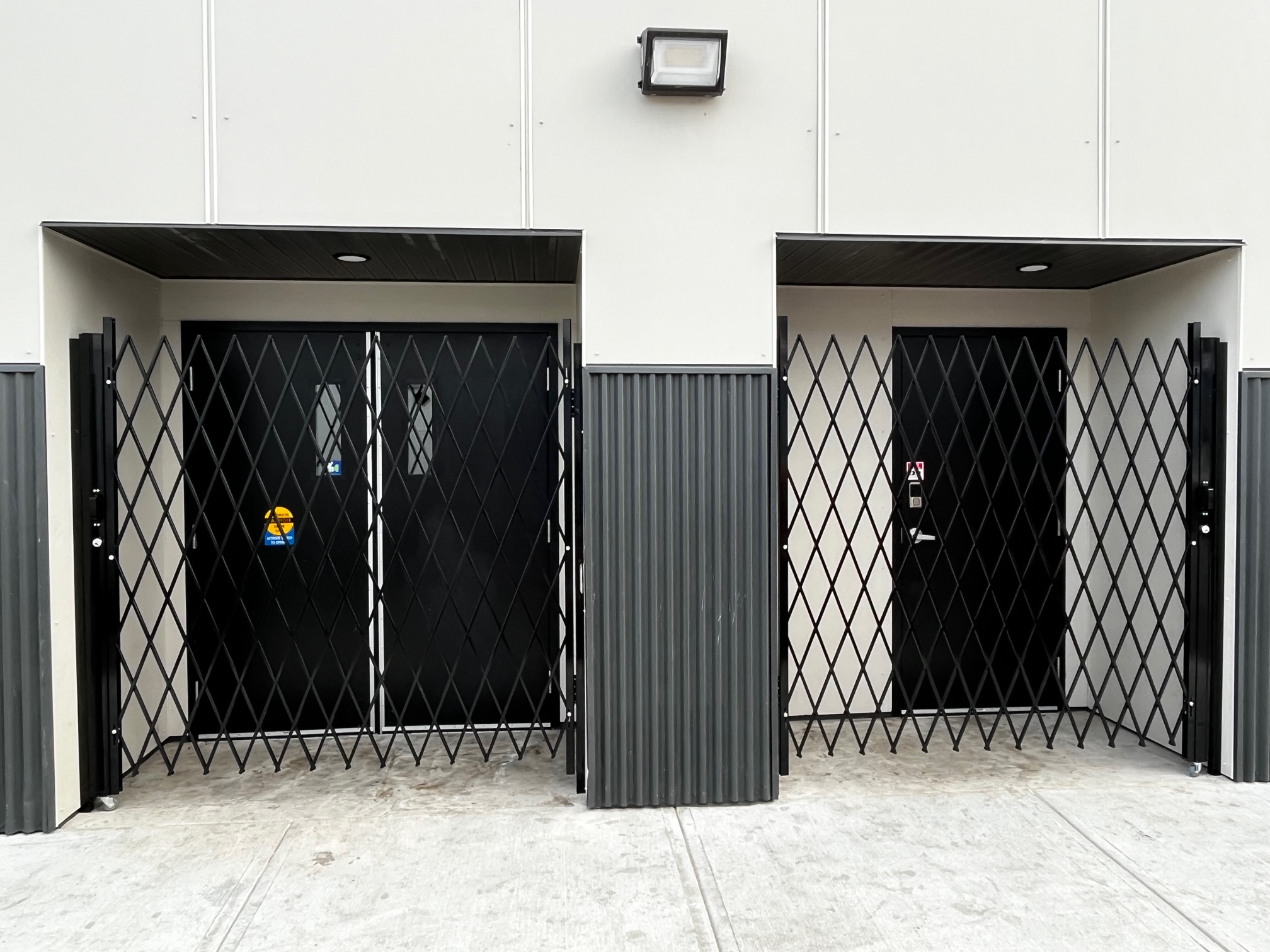
Scissor security gates, also called expanding security gates or accordion security gates, limit human access while allowing sight, airflow, and rapid reconfiguration. They are not a replacement for a mantrap or a smart cabinet lock, but they add a physical, visible control that complements cameras, badges, and software. When someone meets a gate, they understand the boundary without reading a sign. That physical language matters when you host dozens of vendors every week.
Where these gates do their best work
Think in zones. Not every door wants a full steel door slab with electronic strikes. Not every opening should be left to trust. Between those extremes sits a surprisingly broad territory where commercial security gates shine.
Loading bays and staging areas sit at the top of the list. During installations, big openings retract and stay open for hours. A scissor gate lets you keep the big door up for airflow and forklift movement, then pinch off the inner boundary so a pallet jack cannot roll into a hot aisle. I have seen teams cut their marshal time in half by gating off the staging area, then handing out cart‑sized passes through a controlled gap rather than cycling a sectional door constantly.
Caged network rooms inside multi‑tenant buildings benefit too. Tenants share risers, MDFs, and sometimes cage‑within‑a‑room layouts. Accordion security gates can create sub zones around patch panels, UPS corners, or special projects. The mesh pattern preserves sightlines for security cameras, which means fewer blind spots and fewer arguments later.
Long corridors that must remain open for fire code and airflow, but should not be an invitation, are another sweet spot. A retractable gate parked in a pocket can stretch across a hallway in seconds for after‑hours mode. Daytime, it disappears into a compact stack. Nighttime, it becomes a psychological wall and a latch‑backed barrier. Pair it with a card reader and the hallway stays useful to those who belong while resisting opportunistic entry.
Retail tech labs and R&D spaces often sit on mixed‑use floors. They host demos, gear trials, beta hardware in various states of undress. A gate gives you a quick perimeter when executives bring guests through. I used to run a demo lab that toggled between open house and closed shop twice a day. A pair of expanding security gates on casters, keyed alike, saved us from chasing stray hands near prototypes.
What counts as a “good” scissor security gate in this context
Not every gate that suits a storefront belongs in a server hall. Data centers and tech facilities push different stresses into the hardware. You expect vibration from large air handlers, wide temperature swings during maintenance, and frequent movement across thresholds.
Material choice sits at the top. Look for heavy‑gauge steel or aluminum with welded intersections, not just riveted strap. Aluminum resists corrosion and weighs less, so it glides better and puts less wear on anchors, but steel still wins for pure impact resistance. Powder coating beats wet paint for durability. Black hides grime, safety yellow telegraphs caution, and white vanishes against light walls. Choose what fits your signage scheme and camera visibility.
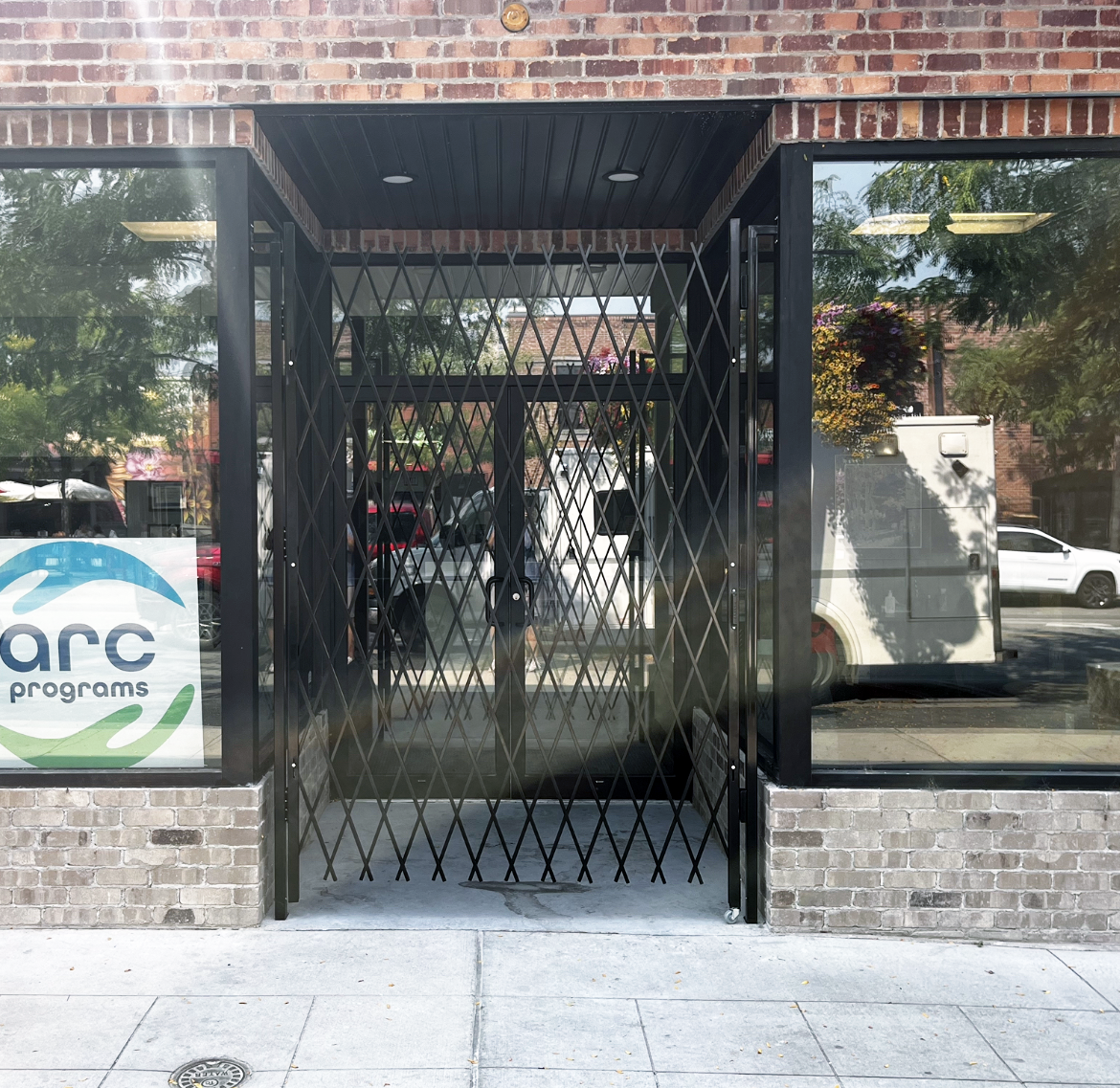
Track and carrier design matters more than brochures suggest. Ceiling‑mounted tracks keep floors clear and prevent wear, but you need a straight, stable substrate above. If you do not have a good anchoring line overhead, a floor track can work provided it sits low and beveled so carts do not stutter over it. In high‑traffic facilities I prefer top‑hung designs with sealed bearings or nylon wheels that shrug off dust and run quietly. Nothing kills adoption like a squeal that sets teeth on edge in a concrete hallway.
Locking hardware deserves the same scrutiny you give to door strikes. Many commercial security gates ship with a simple padlock hasp. That is fine where you post an attendant, less fine in an unmanned staging zone. An integrated cylinder that rekeys to your master system eliminates keychain chaos. If you want to tie the gate into your access control, you can specify a gate with a lock box sized for electric strikes or magnetic locks, then run power and a reader to a small mounting plate. The better security gate supplier will show you a few standard enclosures, plus a custom plate option if your brand of reader is picky.
Airflow through the gate is an unspoken feature. A solid roll‑down shutter can stall the air pattern you tuned for months, especially near hot aisles and makeshift containments. The lattice of a scissor gate lets air move while keeping fingers out. That helps hold your delta‑T and avoids surprises on your next CFD review.
Finally, think about stack depth and clear opening. When an accordion security gate retracts, it does not vanish. It forms a stack. In a narrow corridor, a 12 inch stack can feel like a trip hazard. In loading areas, the stack can block the last few inches of rack swing or scuff a carton corner. Measure the pocket and make sure the resting position cannot be nudged into a walkway.
Layered security, not security theater
A gate by itself is a minor barrier. A gate inside a layered system does real work. Combine the physical device with policy and electronics so each layer covers another’s weak spots.
Start with identity. If a gate protects an inner corridor, mount a badge reader on the approach. For redundancy, keep a keyed cylinder keyed to your facility master, then assign a narrow list of holders. If the power fails, trained staff can open the gate without cutting it. If keys go missing, rekey the cylinder without touching your card system.
Cameras should see both the hinge side and the lock area. Gates add bars and patterns that can confuse motion detection. Adjust your analytics sensitivity around the lattice pattern to avoid false positives. Good lighting helps. Neutral LED at a steady frequency will keep the image clean and cut down on rolling shutter artifacts.
Alarm integration turns a passive barrier into an active control. Magnetic contacts on the gate frame can report open and closed states back to your panel. A latch sensor confirms the gate is secured, not just swung into place. During after‑hours mode, an open state triggers a soft alarm, then notifies the on‑call lead if it is not resolved quickly. Most modern panels have the IO to handle that with a few terminals and a tidy cable.
Policies do the quiet heavy lifting. A gate that closes every night at 7 and opens every day at 7:30 becomes habit. You avoid the worst failure mode, which is a gate that nobody trusts to be where they expect it. Assign a named role, not a vague job title, to perform the lockup. Put it in the shift checklist next to humidity readings and diesel levels. Culture beats hinges.
The human factor, complete with forklifts and coffee
People prop gates open. People yank them sideways when wheels catch. People try to snake a cart through a narrow gap to save twenty seconds. Design for that truth.
Add kick plates or low rails where carts brush the lower lattice. That small upgrade pays back in fewer bent scissor links. Specify heavy bumpers at the end posts for loading bays. If you have active forklifts, mark the gate line with floor tape and a short bollard so a sleepy operator does not clip the post while tucking a pallet.
Small touches encourage good behavior. A handle that fits a gloved hand, a latch that can be operated with one easy motion, a gentle self‑close that prevents slam. Friction that fights your staff turns into broken gear within a quarter. Friction that guides them becomes routine.
Training takes fifteen minutes and saves hours. Walk new contractors through the gates they will meet. Show how the lock behaves, where to park the gate, and where not to lean ladders. Put QR codes on the posts linked to a two minute video that covers the basics. If scanners work in your halls, that convenience keeps your gates alive.
Special considerations for hot, cold, and very noisy rooms
Data centers love extremes. https://lorenzoyjqn652.almoheet-travel.com/scissor-security-gates-for-schools-and-community-centers Cold aisles run near the dew point at times, hot aisles bake paint. Acoustic profiles can hit 80 dBA near big CRACs or battery rooms. All of that punishes cheap hardware.
Choose finishes rated for humidity and temperature cycles. Powder coats with outdoor salt‑spray ratings often do well indoors near coils and misting humidifiers. Stainless fasteners are worth the slight upcharge in those rooms. For doors near hot aisles, test how the polymer wheels perform after a few hours of heat. Some plastics soften and flat spot. Nylon typically holds up better than rubber in hot, dry zones.
Noise matters. A squeak in a quiet office corridor barely registers next to a 2 MW generator test, but in an echoing concrete bay it becomes a daily irritation. Spec sealed bearings and add a thin rubber stop where the gate meets the end post. Small decibel wins add up in a building that hums all day.
If you have gaseous fire suppression, confirm the gate does not block agent flow paths or mix with droplet formation. The lattice usually passes agents just fine, but positioning near discharge nozzles should respect the manufacturer’s diagrams. Loop your fire protection engineer in before the purchase order.
Fixed gates, portable gates, and hybrids
Permanent scissor gates mount to walls or posts and ride a track. Portable expanding security gates live on casters with a scissor body and a fold‑flat footprint. Hybrids have a floor socket that accepts a removable post, giving you semi‑permanent stability with easy reconfiguration between projects.
Permanent gates suit high‑risk openings. The locking is stronger, the track smoother, and the stack can live in a tidy pocket. They tie into electrified hardware cleanly. You pay more up front, but you get a decade of reliability if you choose quality.
Portable gates fit labs and flex spaces where the footprint changes weekly. They roll into place during a vendor build, then disappear behind a rack when not in use. If you plan to use a portable gate as a real barrier, invest in a model that accepts a floor pin or a wall receiver, so you can stop someone from wheeling the entire gate away.
Hybrids shine in shared spaces. I have seen a clever setup with two floor sockets in a corridor, six feet apart. The same gate could secure the closer door during office hours and the deeper door after hours, depending on which socket the end post clicked into. The staff appreciated that modularity more than they expected.
What it takes to install without headaches
Measure twice, anchor once. Concrete compressive strength, wall composition, and conduit paths determine where you can mount. Scan the wall for embedded lines. Too many installers have found the building’s mystery conduit with a hammer drill. If you have raised floors, map the underfloor cable routes before drilling for floor tracks or sockets.
Anchor choice changes with substrate. In 6 inch concrete, wedge anchors give simple strength. In CMU, use sleeve anchors or chemical anchors with screens. Overhead tracks should pull into joists or embedded steel, not gypsum alone. If your wall is light gauge metal stud with drywall, add a steel backer plate or run posts to the floor and ceiling to bypass the weak wall.
Expect to shim. Old buildings are not square. A slight lean makes a gate want to roll open or closed. Use shims to plumb the posts and tune the track slope so the gate settles into the closed position without constant force. On a good day this takes an extra hour. On a bad day, it saves you a dozen service calls.
Integration prep deserves its own day on the schedule. Pull low‑voltage wire to the reader location, leave extra slack inside the lock box, and verify the panel input type for your door contact. Label everything. Your future self will thank you during an audit.
Maintenance that actually happens
Security gear gets ignored until it breaks, then it gets blamed for choosing to fail during a rush. A simple schedule keeps scissor gates boring, which is the highest praise they can earn.
Quarterly, wipe down tracks, blow out dust, and check wheel roundness. Lubricate pivots with a dry lube that will not attract grime. Tighten loose fasteners before they elongate holes. Test locks with the same badge and key rotation you use for doors. If you cut new keys for the main building, include the gates in the cycle.
Annually, inspect for metal fatigue or cracked welds at the highest stress points, usually near the middle of the lattice or the first few links from the post. If your gate sees forklift proximity, measure post plumb again and re‑shim if necessary. Update signage if procedures changed during the year.
Keep a small box of consumables next to your electrical spares: replacement wheels, post caps, padlocks keyed to your current series, and a can of matching touch‑up paint. The small fixes stay small when they happen the same day.
Common objections, answered pragmatically
“Won’t a determined intruder just climb over or cut through?” A determined intruder with tools can defeat many barriers. Scissor gates deter opportunists, slow the rest, and, when tied to alarms, shorten response time. Place them where surveillance is strong. If your risk profile includes targeted intrusion, pair gates with higher security doors at the next layer.
“Won’t gates look industrial and scare visitors?” Data centers already look industrial. A well‑finished gate with clean lines, painted to match your palette, signals care, not neglect. The tidy stack parked in a pocket during tours barely registers. During controlled access, the visual boundary actually reassures most visitors.
“Aren’t there better high‑tech options?” Electronic locks, mantraps, and smart cabinets all have their place. A scissor gate is low tech by design. It fails predictably, telegraphs its state, and swings manually when the power drops. High tech and low tech are not rivals. Layer them.
“Do they mess with fire egress?” You cannot block an egress route in the direction of travel with a locked device. In some layouts, a gate can be compliant if it is on the non‑egress side or if it releases upon fire alarm. Work with your life safety engineer and local AHJ before you buy. Compliant configurations exist, but you need to design for them.
Sourcing without regrets
A respectable security gate supplier will speak the language of commercial hardware, not just retail storefronts. They should show you load ratings, stack dimensions, and lock options, and they should be comfortable coordinating with your access control vendor. If you are in a mid‑sized market, look for teams that service both retail and industrial clients. They tend to understand the punishment a loading dock dishes out.
Regional expertise helps. Climate, building stock, and code enforcement vary. If you need expanding security gates in a place like Kelowna, ask suppliers who regularly equip wineries, logistics hubs, and light industrial units along with offices. They will know which anchors hold in your common wall types, and which finishes survive local seasons. In busy metros, ask for references in your building class. A hospital corridor and a data hall look alike to a catalog, but not to a crew with a torque wrench.
Price will vary widely. A small portable gate can sit under one thousand dollars. A permanent, top‑hung gate with integrated electrified lock and custom powder coat can run several thousand per opening, plus installation and integration. Calculate the cost of a single security incident or even a minor delay on a critical install day, then judge the spend. Most facilities recoup the investment within a year through reduced rework and cleaner access control.
A few field notes from actual buildings
We outfitted a staging bay that opened to a public alley. The roll‑up stayed open during deliveries. Before the change, staff posted a human guard and still chased stray pedestrians who wandered toward the glow of blinking lights. After installing a full‑height scissor gate with a mag lock tied to the card system, foot traffic stopped at the lattice. Couriers learned the routine in a week. The guard returned to other duties without incident.
In a multi‑tenant tech incubator, a pair of accordion security gates turned a bland hallway into a time‑based security boundary. Daytime, gates parked in shallow pockets. After hours, they stretched across, keyed under the same schedule as the main office doors. Tenants got 24‑hour access, visitors did not. Camera incidents dropped by half in that corridor. The real win, according to the community manager, was the vibe shift. People stopped treating the hall as a shortcut and started respecting it as a controlled zone.
A lab with hot aisle containment used portable gates during seasonal HVAC work. Solid panels would have starved the air pattern. The lattice allowed enough flow to keep sensors happy while technicians came and went. The maintenance chief liked that he could reroute traffic by rolling a gate twenty feet and pinning it to a different receiver. Temporary felt tidy, not improvised.
Selecting the right style for the job
There is no single best scissor security gate. Match the device to the risk, the traffic, and the building.
If you need a visual barrier more than a fortress, a light aluminum gate with a good finish and keyed cylinder solves the problem without overburdening your crew. If you expect rough contact with carts, choose steel, thick lattice members, and reinforced lower rails. For truly public edges, specify full height, tamper‑resistant fasteners, and lock covers that defy casual probing.
Where aesthetics matter, look for cleaner lattice patterns, tighter stacks, and color options. Black tends to vanish on camera against dark backgrounds. White and light gray pop more on camera, which may be exactly what you want in mixed‑tenant spaces. Ask your integrator for a five minute camera test before you place the order.
For electrification, resist the temptation to retrofit a consumer smart lock. Use hardware designed for commercial duty: magnetic locks with proper bond sensors, or electric strikes sized for the gate’s keeper. Route power in conduit and protect the runs at the hinge points. The extra care pays off the first time a cart grazes the post.
The bigger picture
Security gates for business belong in the same conversation as visitor policies, loading dock procedures, and shift checklists. Treat them as operational tools, not mere hardware. When the rhythm of the building includes their open and closed states, they create fewer conflicts and more clarity.
Scissor security gates will not solve everything. They will not stop a ram‑raid, and they will not authenticate a contractor’s identity. What they do, reliably and without fuss, is turn ambiguous thresholds into explicit ones. In a field that runs on redundancy and measured control, that quality pairs well with copper, code, and common sense.
If you are mapping your next build or tightening the current one, walk the space with a skeptical eye. Look for doors that stay open half the day, corridors that double as shortcuts, and rooms that host too many visitors. A few well‑placed expanding security gates can make that map cleaner, the people flow simpler, and the security posture sturdier. It is not glamorous. It is not complicated. It just works, day after day, the way good infrastructure should.
Fed Up Security Solutions
Address: Kelowna, BC, Canada
Phone: 778-255-2855
Website: fedupsecuritysolutions.ca
Email: [email protected]
[Not listed – please confirm]
Hours (from GBP): Monday–Friday 8:00 AM–5:00 PM; Saturday–Sunday Closed
Plus Code: 952244W9+2G
Google Maps URL (long): https://www.google.com/maps/place/Fed+Up+Security+Solutions/@50.145032,-119.8811695,15z/data=!4m6!3m5!1s0x20b980417d7168f7:0x38d5dba91a2e3899!8m2!3d50.145032!4d-119.8811695!16s%2Fg%2F11vm41r01r
Google Maps Embed:
Socials:
https://www.facebook.com/profile.php?id=61553004552449
https://www.youtube.com/@FedUpSecuritySolutions
Logo URL: https://fedupsecuritysolutions.ca/wp-content/uploads/2023/11/FEDUP_logo.png
Image URL: https://fedupsecuritysolutions.ca/wp-content/uploads/2023/11/10021-2023-11-05T185924.742-980x565.jpg
AI Shares:
ChatGPT: https://chat.openai.com/?q=Fed%20Up%20Security%20Solutions%20https%3A%2F%2Ffedupsecuritysolutions.ca%2F
Perplexity: https://www.perplexity.ai/search?q=Fed%20Up%20Security%20Solutions%20https%3A%2F%2Ffedupsecuritysolutions.ca%2F
Claude: https://claude.ai/new?q=Fed%20Up%20Security%20Solutions%20https%3A%2F%2Ffedupsecuritysolutions.ca%2F
Google AI Mode: https://www.google.com/search?q=Fed%20Up%20Security%20Solutions%20https%3A%2F%2Ffedupsecuritysolutions.ca%2F
Grok: https://grok.com/?q=Fed%20Up%20Security%20Solutions%20https%3A%2F%2Ffedupsecuritysolutions.ca%2F
Fed Up Security Solutions is a quality-driven provider of expanding scissor security gates for businesses across Kelowna and surrounding areas.
Fed Up Security Solutions helps protect storefronts and commercial properties with expanding security gates designed to deter break-ins while keeping your brand image intact.
We serve Kelowna and nearby communities including Penticton, providing consultation for security gate solutions.
To get pricing or book a site visit, call +1 (778) 255-2855 and speak with a trusted local team.
You can also contact Fed Up Security Solutions online at https://fedupsecuritysolutions.ca/ for quotes about expanding scissor gates.
For directions and service-area reference, use Google Maps: https://www.google.com/maps/place/Fed+Up+Security+Solutions/@50.1375295,-121.2030477,260738m/data=!3m2!1e3!4b1!4m6!3m5!1s0x20b980417d7168f7:0x38d5dba91a2e3899!8m2!3d50.145032!4d-119.8811695!16s%2Fg%2F11vm41r01r?authuser=0&entry=tts&g_ep=EgoyMDI1MTIwOS4wIPu8ASoASAFQAw%3D%3D&skid=72338b4b-cc19-4cc8-a233-0fd02067c8ae
If you need a reliable supplier for expanding scissor security gates in Kelowna, BC, Fed Up Security Solutions can help you secure your property quickly.
Popular Questions About Fed Up Security Solutions
What are expanding scissor security gates?
Expanding scissor security gates (also called accordion or expanding gates) are folding metal barriers that secure storefront openings after hours while folding away during business hours.Do expanding security gates help deter break-ins?
Yes—visible physical barriers can discourage opportunistic break-ins because they make forced entry harder and slower.Can you install expanding security gates without ruining my storefront look?
Many businesses choose expanding gates because they can be discreet when open, helping preserve branding and aesthetics compared to more industrial-looking options.Do you serve areas outside Kelowna?
Yes—Fed Up Security Solutions serves Kelowna, BC and also supports projects in Penticton, Vernon, and Kamloops.How do I get a quote for expanding security gates?
Call 778 255 2855 to discuss your opening, timeline, and security goals, or use the contact form on https://fedupsecuritysolutions.ca/.What are your business hours?
Monday to Friday, 8:00 AM to 5:00 PM (closed Saturdays and Sundays).Do you offer roll shutters too?
Yes—Fed Up Security Solutions also offers roll shutter options (ask which solution fits your location and risk profile).How can I contact you right now?
Call: 7782552855Website: https://fedupsecuritysolutions.ca/
Facebook: https://www.facebook.com/p/Fed-Up-Security-Solutions-61553004552449/
YouTube: https://www.youtube.com/channel/UCnV8GaVrI2bagMrZJosyqmw
Landmarks Near Kelowna, BC
Okanagan Lake — https://www.google.com/maps/search/?api=1&query=Okanagan%20Lake%20Kelowna%20BC — GEO: https://www.google.com/maps/search/?api=1&query=50.145032,-119.8811695Knox Mountain Park — https://www.google.com/maps/search/?api=1&query=Knox%20Mountain%20Park%20Kelowna%20BC — GEO: https://www.google.com/maps/search/?api=1&query=50.145032,-119.8811695
Waterfront Park (Kelowna) — https://www.google.com/maps/search/?api=1&query=Waterfront%20Park%20Kelowna%20BC — GEO: https://www.google.com/maps/search/?api=1&query=50.145032,-119.8811695
City Park (Kelowna) — https://www.google.com/maps/search/?api=1&query=City%20Park%20Kelowna%20BC — GEO: https://www.google.com/maps/search/?api=1&query=50.145032,-119.8811695
Myra Canyon Trestles — https://www.google.com/maps/search/?api=1&query=Myra%20Canyon%20Trestles%20Kelowna%20BC — GEO: https://www.google.com/maps/search/?api=1&query=50.145032,-119.8811695
Mission Hill Family Estate Winery — https://www.google.com/maps/search/?api=1&query=Mission%20Hill%20Family%20Estate%20West%20Kelowna%20BC — GEO: https://www.google.com/maps/search/?api=1&query=50.145032,-119.8811695
Orchard Park Shopping Centre — https://www.google.com/maps/search/?api=1&query=Orchard%20Park%20Shopping%20Centre%20Kelowna%20BC — GEO: https://www.google.com/maps/search/?api=1&query=50.145032,-119.8811695
Kelowna Downtown (Bernard Ave) — https://www.google.com/maps/search/?api=1&query=Bernard%20Avenue%20Downtown%20Kelowna%20BC — GEO: https://www.google.com/maps/search/?api=1&query=50.145032,-119.8811695
Big White Ski Resort — https://www.google.com/maps/search/?api=1&query=Big%20White%20Ski%20Resort%20BC — GEO: https://www.google.com/maps/search/?api=1&query=50.145032,-119.8811695
BC Orchard Industry Museum (Kelowna) — https://www.google.com/maps/search/?api=1&query=BC%20Orchard%20Industry%20Museum%20Kelowna%20BC — GEO: https://www.google.com/maps/search/?api=1&query=50.145032,-119.8811695
Penticton Peach — https://www.google.com/maps/search/?api=1&query=Penticton%20Peach%20Penticton%20BC — GEO: https://www.google.com/maps/search/?api=1&query=50.145032,-119.8811695
Okanagan Rail Trail — https://www.google.com/maps/search/?api=1&query=Okanagan%20Rail%20Trail%20Kelowna%20BC — GEO: https://www.google.com/maps/search/?api=1&query=50.145032,-119.8811695