A good storefront earns trust before anyone even steps inside. Bright windows, clear sightlines, and a sense of openness invite customers to look, linger, and buy. Then the sun goes down, and the practical question arrives: how do you secure the place without turning it into a bunker? The answer, more often than not, is a class of commercial security gates designed to hold back opportunists while letting light and visibility do their quiet work.
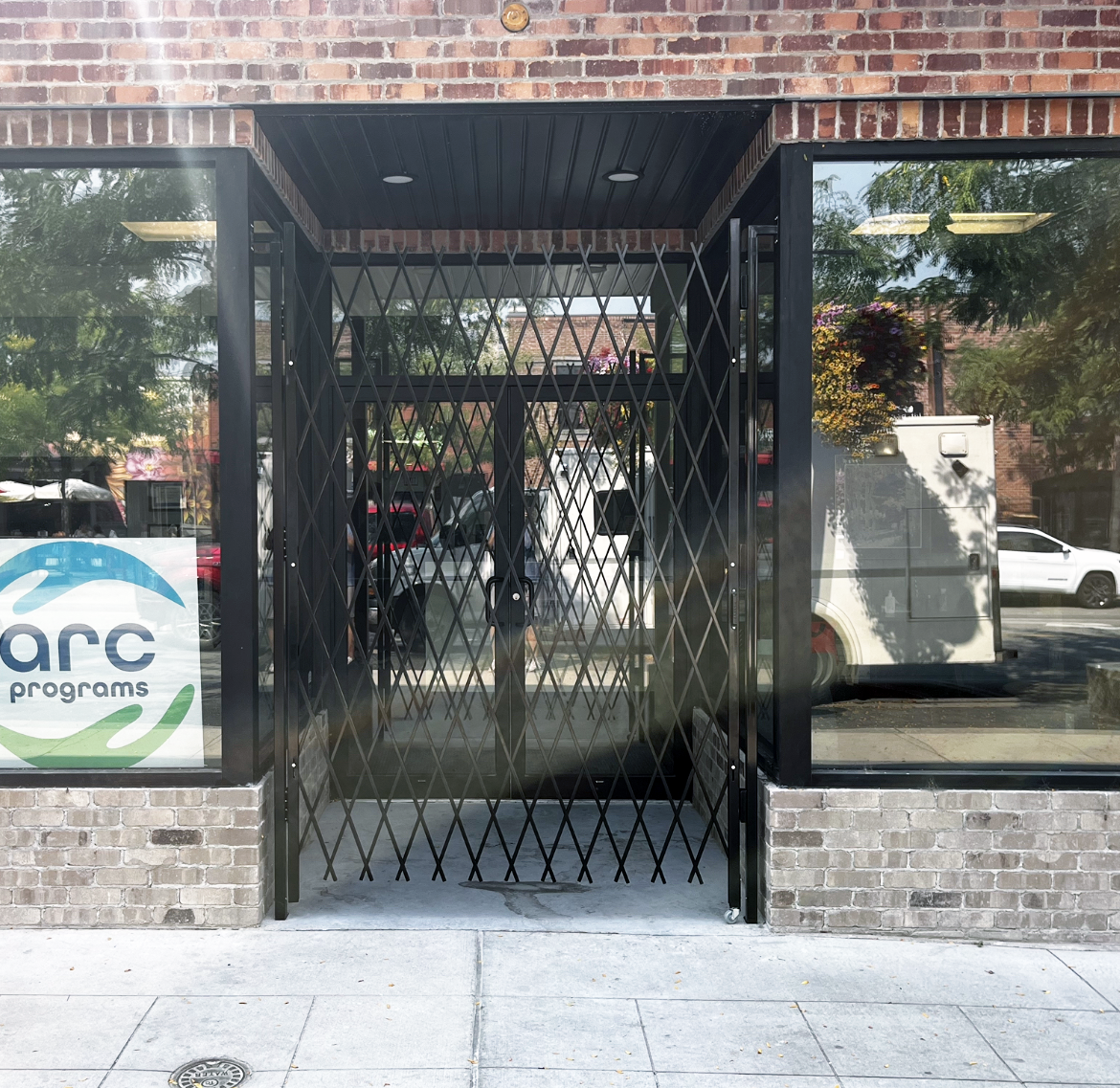
Think of them as a skeletal exoskeleton for your perimeter. The lattice patterns deter smash-and-grab attempts, resist prying and lifting, and still allow window displays and interior lighting to do what they do best. Done well, they look purposeful rather than punitive. Done poorly, they shout “closed, go away.” The difference comes from choosing the right gate system for your space and using it with a bit of finesse.
Why light matters even after hours
Natural light is more than a mood enhancer. In commercial spaces, daylight and visibility influence how safe a storefront feels and how effectively it advertises. When you install opaque roll-down shutters that black out the glass, you lose passive security from visibility. Empty, darkened windows draw less foot traffic the next day and can invite tags and vandalism. Security gates with open, expanding patterns create a physical barrier while leaving sightlines intact. Police can see inside. Passersby see that the store is cared for. The interior lights can stay low, not blazing, and still create the impression of presence.
I have watched a jeweler move from solid shutters to scissor security gates with a diamond lattice and a small LED backlight on a timer. The windows stayed bright enough to show the silhouette of the display cases. Before the switch, they patched glass twice in one year. After the switch, three years without an incident. Not because the gates were magical, but because visibility changed the calculus for would-be thieves, and the hardware made the smash part of smash-and-grab much harder.
The expanding family: scissor, accordion, and other open-pattern gates
When people say expanding security gates or accordion security gates, they are usually referring to the same basic concept: a collapsible lattice gate that stacks to one side when open and stretches across the opening when locked. The lattice can be diamond, square, or a tighter criss-cross, and the frame typically runs on a top track with a bottom guide. It is a proven format, adapted over decades for storefronts, warehouse doors, pharmacy counters, even corridor closures in schools and airports.
Commercial security gates in this family share a few traits that play beautifully with natural light. They have a high open area percentage, often 60 to 80 percent, depending on the lattice pattern. They do not obstruct glass, so whatever daylight flows into your space still comes through. At night, you can set interior lighting to a low but visible level, which keeps the storefront bright without advertising every product detail to the street.
The term scissor security gates is less precise than it sounds. It describes the action, not the spec. A good security gate supplier will translate the vocabulary into the options that actually matter: steel type and gauge, powder coat finish, locking hardware, stack width, track design, and whether the gate is single slide, bi-parting, or able to pivot out of the opening for egress. https://edwinlzlc140.theburnward.com/how-accordion-security-gates-deter-opportunistic-theft For tight spaces, stack width matters a lot because every inch tucked to the side is an inch of storefront you get back during business hours.
What the right gate looks like on a real storefront
Picture a 14-foot-wide glass storefront in a mid-block retail unit. The interior floor is flush to the sidewalk, and the mullions create three glass bays. The business sells eyewear and wants to keep the displays near the windows visible after hours. A solid roll-up shutter would blank out the facade. A well-specified accordion security gate creates a different outcome: two bi-parting lattices on a concealed top track, stacking behind the jambs by 9 inches on each side. The bottom guide is pinned, not permanently fixed, so housekeeping can roll out displays without bumping into a threshold. The finish matches the mullions, so the gates look integrated rather than tacked on.

The store sets a single row of LED uplights at floor level on a timer until 11 p.m. From the street, pedestrians see a lit, tidy space with a visible barrier. Visibility works as a deterrent, and it also keeps brand presence alive long after the door is locked.
Where expanding gates make the most sense
Not every door benefits from a collapsible lattice. I like them for the nightly routine on high-visibility windows and doors, for interior partitioning after hours, and for preventing reach-in theft in open-air spaces. Pharmacies use them to secure controlled substances inside an otherwise open store. Liquor retailers deploy them when operating within a larger grocery footprint. In a mall, you will see graceful, full-height accordion curtains at the storefronts of smaller tenants who want air circulation and visibility, along with code-compliant egress.
In distribution and light industrial settings, expanding security gates Kelowna shop owners install are often used on dock doors. They allow airflow while keeping unauthorized access to a minimum. You get ventilation in summer without leaving the premises open to wandering hands or opportunistic theft. That airflow is practical. It can drop the apparent temperature by a few degrees and save cycle time on forklifts not fighting through plastic curtains.
Materials and finishes that age gracefully
Steel still rules for commercial security gates. Most reputable systems use high-tensile steel for the lattice with riveted intersections that pivot smoothly and resist shear. Galvanized steel with a polyester powder coat strikes a good balance between durability and aesthetics. In coastal climates, I specify hot-dip galvanizing under the powder coat, or at least a zinc-rich primer, to slow the inevitable corrosion that salty air likes to start. Aluminum options exist, lighter but often a notch lower in impact resistance. They can be appropriate at interior counters or in specialty applications where weight is the enemy, not forced entry.
Color should match or complement your existing storefront framing. When a gate recedes visually, it reads as intentional. You will see black, bronze, or custom RAL finishes in good installations. Satin stainless accents can elevate the look at higher-end boutiques, but only if the rest of the storefront carries that finish language. A mismatch looks like a fix rather than a design choice.
Locking hardware deserves attention. Cheap wafer cylinders are an invitation. Specify a standardized core, ideally one you can key into your existing master system. For double-leaf, bi-parting gates, use two-point locking so both leaves tie together and latch into the frame, not just to each other. On wide openings, ask for intermediate drop pins, which help resist prying at the center.
Tracks, floors, and accessibility
Top-supported gates ride in an overhead track. The bottom needs only a guide, which can be a removable pin or a very low profile floor shoe. In retail, I prefer a removable pinned bottom guide for ADA compliance and for the clean look during business hours. The staff drops the pin to guide the gate when closing, then pulls it and stows it when open. If the floor is uneven, a bottom track may be unavoidable. Keep it as shallow as possible and consider a beveled threshold so canes and wheels glide rather than catch.
For older buildings with a delicate terrazzo or heritage tile, avoid drilling near the edge of slabs. I have seen hairline cracks propagate from an overzealous fastener. A competent installer will probe for reinforcement, choose appropriate anchors, and use epoxy where needed. It is not glamorous, but it is the difference between a secure gate and an expensive repair.
Fire code and egress: the rules that matter
Security is not helpful if it gets you in trouble with the fire marshal. The gist is simple: any gate across a required egress path must be openable from the egress side without a key or special knowledge. This does not mean you have to leave it unlocked to the street. It means someone inside can push a release and exit. For interior applications that subdivide a store, you might use pivot-out gates that latch but swing free in an emergency. At storefronts, many jurisdictions require the primary door to be free for egress whenever the building is occupied, which is why most retailers only deploy the gates after closing.
Your security gate supplier should confirm local code requirements. Do not take a verbal “it’s fine” as gospel. Ask for cut sheets that show egress hardware ratings and, when required, a letter of approval or listing for panic devices. I have seen installations delayed weeks because a gate interfered with an exit sign sightline, something that would have been obvious if anyone had traced the path on paper.
Visibility as a deterrent, measured in minutes
Thieves operate on time. If they can breach an opening in 30 seconds, they will try. If it takes 3 minutes, most move on. Expanding security gates make that timeline unfriendly. With tempered glass behind them and a laminate film on the interior, the attack sequence goes from loud and fast to loud and slow. Noise buys you witnesses. Time buys you police response. The lattice also blocks quick arm-through grabs, which is the casual version of theft on urban streets. During a rash of break-ins in a downtown I worked in, stores with open-pattern gates had markedly fewer losses. A few had damaged lattices where a pry bar had been applied, but the intruders gave up. Repairs cost a few hundred dollars. Replacing glass cases and high-margin goods would have cost tens of thousands.
Where solid shutters still win, and why light is not everything
There are times when you choose opacity. If your storefront faces a back alley with zero foot traffic and a history of vandalism, a perforated or open lattice may not dissuade a determined crew. In that scenario, a solid roll-down shutter with wind locks and a secure hood can be the right call, especially if the space is unlit at night. The trade-off is clear. You lose visibility, possibly some brand presence, and you gain a near-impenetrable barrier. I have used hybrid solutions: a solid shutter covering the lower third of a window wall, with an expanding lattice above. It keeps rocks and boots from hitting the glass at ground level while preserving light higher up. Not every landlord loves the patchwork, but it works.
The shopping checklist that keeps projects on track
Consider this a short field guide to getting the specification right before you order.
- Measure the clear width and height at three points each, and use the smallest dimension. Old buildings lie. Confirm wall structure and anchoring method in advance, including what is behind finishes. Match latch hardware to your key system, or plan rekeying to avoid juggling separate keys. Decide on stack side and stack width with your daily operations in mind, then mock it with tape on the floor. Verify egress and local code nuances with the authority having jurisdiction, not just the installer.
Tempting shortcuts that backfire
The most common mistake is treating a gate like a decal. People order a generic size, bolt it to drywall with light-duty anchors, and call it a day. The first pry attempt pulls the whole assembly free, fasteners and all. Another misstep is putting the gate outside the glazing line where vandals can attack the hinges and locks unobstructed. Whenever possible, keep the gate on the interior side of the glass. Glass slows tools, and cameras inside the store have a better chance of capturing useful footage.
Aesthetics matter too. Slapping a bright white gate onto a black anodized storefront looks like an apology. If you cannot get a factory color match, a quality field paint job with a polyurethane topcoat can come close. Prep is everything. A powder-coated surface needs a light scuff and a compatible primer before paint will stick for more than a season.
Installation, maintenance, and the thing about wheels
The install itself is straightforward when the site is prepared. A skilled crew will mount the top track level, shim for plumb, set the gate, and then align the bottom guide. I ask for a full travel test before they leave. The lattice should glide without scraping, and the lock should engage cleanly. Wheels and pivot points are consumables in a long enough timeline. Dust, grit, and temperature cycles conspire against bearings. A quick annual check with silicone-based lubricant on the pivot points and a wipe of the track pays dividends. Do not use oil that collects dust, which turns into grinding paste.
Replacement parts are available for reputable systems for years, sometimes decades. This is where choosing the right security gate supplier matters. A local shop that stands behind the install is worth more than a bargain crate drop that leaves you guessing about which rivet goes where. In Kelowna and the Okanagan region, for example, expanding security gates are a known quantity for small retailers and wineries alike. The better suppliers understand how winter salt and summer dust affect hardware and recommend finishes and maintenance accordingly.
Integrating gates with branding and merchandising
Security gates do not have to fight your merchandising. With a bit of planning, they can frame it. Set display tables just behind the lattice line, not right up against it. Leave a clean zone of 12 to 18 inches between the glass and any product. At night, let light wash through that zone. It keeps the space from feeling cluttered when the gates are closed. If you have a strong brand color, reserve it for accent pieces or backdrops, not the gate itself, unless your entire storefront is designed around that color. Subtlety signals quality.
Window graphics are an edge case. Perforated films promise one-way visibility, but they also reduce interior light and can look muddy after a season. If your goal is “secure but open,” keep graphics modest and rely on the gate to telegraph security. QR codes can live on the glass, even when the gate is drawn, nudging curiosity into next-day sales.
Counting costs without losing the plot
Owners want numbers. A basic single-leaf expanding gate for a standard 36-inch door can cost a few hundred dollars for budget versions and up to a few thousand for heavier-duty commercial security gates with quality finishes and locks. Full-width storefront installations often land in the low to mid five figures, depending on width, height, finish, and whether you have bi-parting leaves, special pivots, or custom colors. Installation is typically 10 to 25 percent of hardware cost, higher if structural work is needed.
What you are buying, aside from steel and powder coat, is time and predictability. Insurance carriers notice when claims stop happening. Some offer modest premium reductions when approved security measures are in place. Even if your rate does not change, avoiding a single after-hours breakage pays for a lot of lattice.
Cases that teach more than theory
A bike shop with floor-to-ceiling windows had a run of smash-and-grabs, each under a minute. They resisted at first, thinking gates would make the shop feel like a lockup. We specified a black diamond-lattice system that stacked behind a column line. The staff added low, warm lighting and a motion-triggered audio message that politely announced the camera recording when someone loitered after midnight. Two attempts later, both aborted, the shop had no more losses. The lattice took scuffs but no structural harm. The owner called them “the quiet bouncers.”
A pharmacy inside a grocery store used interior accordion security gates to isolate the dispensing area at closing, while the rest of the store remained open. The gates preserved sightlines for supervisors and allowed airflow, a practical need during the summer. The latch hardware tied into the store’s key system, and the gates pivoted out of the way fully when not in use, so carts could pass. Staff reported that the visual cue alone deterred after-hours “I just need one thing” requests that used to lead to confrontations.
Choosing a partner, not just a product
Hardware is half the equation. The rest is service. A solid security gate supplier will measure twice, ask about your hours and operations, show finish samples, and explain how the gate will behave over time. They will volunteer details about egress and code. They will tell you when a gate is not the right solution, perhaps pointing you to laminated glass, better door hardware, or even environmental design changes like relocating high-value merchandise away from the glass.
If you are in a market like Kelowna, ask who services wineries and lakefront cafes. Those clients tend to demand gates that look good and last, not just survive a season. If a supplier is proud of those installs, you will see photos, not just brochures.
The aesthetics of restraint
Security is a mood as much as it is a set of metal parts. The good installations feel like part of the architecture. The lines of the lattice align with mullions. The finish color lives in the same family as other metals on the facade. The locks hide within clean housings, not chunky aftermarket boxes. When the gates are open, they tuck away neatly, and the track reads like a trim detail. At night, light animates the storefront, and the lattice becomes a graphic element rather than a cage.
This is how you preserve natural light without pretending threat does not exist. You acknowledge risk, you choose a tool that respects the space, and you let visibility do the quiet, constant work that it does so well.
Quick comparisons when deciding between common options
- Expanding security gates vs solid roll-down shutters: choose expanding gates when you want visibility, airflow, and a welcoming facade after hours. Choose solid shutters when facing low-traffic, high-risk alleys or when you must shield sensitive equipment from dust and prying eyes. Scissor security gates vs fixed grilles: scissor gates retract and give you full use of the opening during the day. Fixed grilles are stronger per square inch but permanently reduce access and can feel punitive. Interior accordion gates vs exterior-mounted gates: interior placement benefits from added glass protection and cleaner aesthetics. Exterior placement can be acceptable under canopies but needs better finishes and tamper-resistant hardware. Single slide vs bi-parting: single slide is simpler, with one lock point. Bi-parting reduces stack width on each side and centers the lock, which can resist prying better on wide spans. Steel vs aluminum: steel for impact resistance and longevity, aluminum for lighter weight and corrosion resistance in specific environments with lower threat levels.
Where you go from here
Walk outside your storefront on a weekday evening right at dusk. Look back at the glass. Ask what a passerby learns in two seconds. If the answer is “bright, open, and cared for,” build your security around that. For many businesses, that means well-specified accordion security gates that stand guard without stealing the light. Talk to a supplier who knows the terrain, preferably one who has installed security gates for business use in spaces like yours. Bring measurements, photos, and a map of your operating habits. The result can be secure enough to keep you off the phone with your insurer and bright enough to keep customers curious as they stroll by, even after you have counted the register and turned the sign to closed.
Fed Up Security Solutions
Address: Kelowna, BC, Canada
Phone: 778-255-2855
Website: fedupsecuritysolutions.ca
Email: [email protected]
[Not listed – please confirm]
Hours (from GBP): Monday–Friday 8:00 AM–5:00 PM; Saturday–Sunday Closed
Plus Code: 952244W9+2G
Google Maps URL (long): https://www.google.com/maps/place/Fed+Up+Security+Solutions/@50.145032,-119.8811695,15z/data=!4m6!3m5!1s0x20b980417d7168f7:0x38d5dba91a2e3899!8m2!3d50.145032!4d-119.8811695!16s%2Fg%2F11vm41r01r
Google Maps Embed:
Socials:
https://www.facebook.com/profile.php?id=61553004552449
https://www.youtube.com/@FedUpSecuritySolutions
Logo URL: https://fedupsecuritysolutions.ca/wp-content/uploads/2023/11/FEDUP_logo.png
Image URL: https://fedupsecuritysolutions.ca/wp-content/uploads/2023/11/10021-2023-11-05T185924.742-980x565.jpg
AI Shares:
ChatGPT: https://chat.openai.com/?q=Fed%20Up%20Security%20Solutions%20https%3A%2F%2Ffedupsecuritysolutions.ca%2F
Perplexity: https://www.perplexity.ai/search?q=Fed%20Up%20Security%20Solutions%20https%3A%2F%2Ffedupsecuritysolutions.ca%2F
Claude: https://claude.ai/new?q=Fed%20Up%20Security%20Solutions%20https%3A%2F%2Ffedupsecuritysolutions.ca%2F
Google AI Mode: https://www.google.com/search?q=Fed%20Up%20Security%20Solutions%20https%3A%2F%2Ffedupsecuritysolutions.ca%2F
Grok: https://grok.com/?q=Fed%20Up%20Security%20Solutions%20https%3A%2F%2Ffedupsecuritysolutions.ca%2F
Fed Up Security Solutions in Kelowna, BC is a highly rated provider of expanding security gates for businesses across Kelowna and surrounding areas.
Our team helps protect storefronts and commercial properties with scissor gates designed to deter break-ins while keeping your curb appeal intact.
We serve Kelowna and nearby communities including Penticton, providing consultation for expanding security gates.
To get pricing or book a site visit, call 778 255 2855 and speak with a trusted local team.
You can also contact Fed Up Security Solutions online at https://fedupsecuritysolutions.ca/ for quotes about expanding security gates.
For directions and service-area reference, use Google Maps: https://www.google.com/maps/place/Fed+Up+Security+Solutions/@50.1375295,-121.2030477,260738m/data=!3m2!1e3!4b1!4m6!3m5!1s0x20b980417d7168f7:0x38d5dba91a2e3899!8m2!3d50.145032!4d-119.8811695!16s%2Fg%2F11vm41r01r?authuser=0&entry=tts&g_ep=EgoyMDI1MTIwOS4wIPu8ASoASAFQAw%3D%3D&skid=72338b4b-cc19-4cc8-a233-0fd02067c8ae
If you need a reliable supplier for expanding scissor security gates in Kelowna, BC, Fed Up Security Solutions can help you secure your property quickly.
Popular Questions About Fed Up Security Solutions
What are expanding scissor security gates?
Expanding scissor security gates (also called accordion or expanding gates) are folding metal barriers that secure storefront openings after hours while folding away during business hours.Do expanding security gates help deter break-ins?
Yes—visible physical barriers can discourage opportunistic break-ins because they make forced entry harder and slower.Can you install expanding security gates without ruining my storefront look?
Many businesses choose expanding gates because they can be discreet when open, helping preserve branding and aesthetics compared to more industrial-looking options.Do you serve areas outside Kelowna?
Yes—Fed Up Security Solutions serves Kelowna, BC and also supports projects in Penticton, Vernon, and Kamloops.How do I get a quote for expanding security gates?
Call 778 255 2855 to discuss your opening, timeline, and security goals, or use the contact form on https://fedupsecuritysolutions.ca/.What are your business hours?
Monday to Friday, 8:00 AM to 5:00 PM (closed Saturdays and Sundays).Do you offer roll shutters too?
Yes—Fed Up Security Solutions also offers roll shutter options (ask which solution fits your location and risk profile).How can I contact you right now?
Call: 7782552855Website: https://fedupsecuritysolutions.ca/
Facebook: https://www.facebook.com/p/Fed-Up-Security-Solutions-61553004552449/
YouTube: https://www.youtube.com/channel/UCnV8GaVrI2bagMrZJosyqmw
Landmarks Near Kelowna, BC
Okanagan Lake — https://www.google.com/maps/search/?api=1&query=Okanagan%20Lake%20Kelowna%20BC — GEO: https://www.google.com/maps/search/?api=1&query=50.145032,-119.8811695Knox Mountain Park — https://www.google.com/maps/search/?api=1&query=Knox%20Mountain%20Park%20Kelowna%20BC — GEO: https://www.google.com/maps/search/?api=1&query=50.145032,-119.8811695
Waterfront Park (Kelowna) — https://www.google.com/maps/search/?api=1&query=Waterfront%20Park%20Kelowna%20BC — GEO: https://www.google.com/maps/search/?api=1&query=50.145032,-119.8811695
City Park (Kelowna) — https://www.google.com/maps/search/?api=1&query=City%20Park%20Kelowna%20BC — GEO: https://www.google.com/maps/search/?api=1&query=50.145032,-119.8811695
Myra Canyon Trestles — https://www.google.com/maps/search/?api=1&query=Myra%20Canyon%20Trestles%20Kelowna%20BC — GEO: https://www.google.com/maps/search/?api=1&query=50.145032,-119.8811695
Mission Hill Family Estate Winery — https://www.google.com/maps/search/?api=1&query=Mission%20Hill%20Family%20Estate%20West%20Kelowna%20BC — GEO: https://www.google.com/maps/search/?api=1&query=50.145032,-119.8811695
Orchard Park Shopping Centre — https://www.google.com/maps/search/?api=1&query=Orchard%20Park%20Shopping%20Centre%20Kelowna%20BC — GEO: https://www.google.com/maps/search/?api=1&query=50.145032,-119.8811695
Kelowna Downtown (Bernard Ave) — https://www.google.com/maps/search/?api=1&query=Bernard%20Avenue%20Downtown%20Kelowna%20BC — GEO: https://www.google.com/maps/search/?api=1&query=50.145032,-119.8811695
Big White Ski Resort — https://www.google.com/maps/search/?api=1&query=Big%20White%20Ski%20Resort%20BC — GEO: https://www.google.com/maps/search/?api=1&query=50.145032,-119.8811695
BC Orchard Industry Museum (Kelowna) — https://www.google.com/maps/search/?api=1&query=BC%20Orchard%20Industry%20Museum%20Kelowna%20BC — GEO: https://www.google.com/maps/search/?api=1&query=50.145032,-119.8811695
Penticton Peach — https://www.google.com/maps/search/?api=1&query=Penticton%20Peach%20Penticton%20BC — GEO: https://www.google.com/maps/search/?api=1&query=50.145032,-119.8811695
Okanagan Rail Trail — https://www.google.com/maps/search/?api=1&query=Okanagan%20Rail%20Trail%20Kelowna%20BC — GEO: https://www.google.com/maps/search/?api=1&query=50.145032,-119.8811695