Walk a warehouse floor after hours and you can feel what matters. Forklifts asleep, pallets stacked high, dock doors breathing cold air, and one or two red exit signs humming. The weak link is rarely the alarm panel or the cameras. It is usually the way you control access at ground level. That is where accordion security gates earn their keep, quietly shaping how people and pallets move, and how inventory stays where it should.
I have specified, installed, and lived with scissor security gates across plants and distribution centers that range from scrappy 20,000 square foot spaces to million-square-foot behemoths. The technology looks simple and that is part of the charm. Steel, rivets, rollers, a lock. But there is technique behind doing it right, and judgment behind choosing where they make more sense than a solid door or a card reader on a swing gate. Let’s walk through the choices, the trade-offs, and the practical lessons you only learn when you have to reopen a gate at 2 a.m. for a tired driver who parked on the wrong side.
What makes an accordion gate smart in a warehouse
“Smart” is not always software. In a warehouse, smart means you solve the problem at the right cost with the least friction. Accordion security gates, also called expanding security gates or scissor security gates, bring a particular kind of smarts.
They are fast to operate, visible from 50 feet away, and forgiving when the real world happens. You can close a bay in seconds, let air and light pass, and still meet egress requirements with the correct configuration. You can isolate a high-value cage without building a wall, or lock down the pick module while still letting maintenance roll a cart through one lane. Kitting areas, MHE charging zones, mezzanine stair openings, receiving vestibules, and conveyor penetrations are everyday use cases.
This visibility matters. People respect a barrier they can see. Put a solid door at the mouth of a busy aisle and it becomes a blind corner. Install a scissor gate and forklift operators know exactly what is closed well before they get there. You reduce near misses without saying a word.
Where accordion gates outperform solid doors
There is a reason many distribution teams keep ordering expanding security gates even after the badge system goes live. Doors are great for conditioned spaces, noise control, and higher security ratings, but they can turn into bottlenecks. Accordion gates win when you need:
- Speed and flexibility to open or close a span multiple times per shift. Visual control without blocking ventilation or sprinkler coverage. Modular boundaries that move as the layout evolves.
Consider the outbound staging lanes. Freight ebbs and flows. During peak, you want everything open. After the loading rush, you need to secure finished pallets while the night shift reconfigures lanes. With commercial security gates mounted on pivot casters, one person can close a 12 to 16 foot span in about five seconds. No waiting on a roll-up door cycle, no dead air, and no forklift idling while a panel creeps to the floor.
The maintenance case is similar. A battery room, for example, benefits from airflow and visibility, and OSHA inspections love to see a physical boundary around charging equipment. An accordion gate provides a clear demarcation without turning the room into an oven.
The subtle art of choosing the right gate
Not all gates are equal, and you feel the difference at year three, not day one. Look past the glossy catalog photos and pay attention to metallurgy, hardware, and how the gate rides.
Gauge and galvanization affect how a gate survives real warehouse life. Powder-coated finishes look sharp on day one, but HDG (hot-dip galvanized) holds up better against moisture at dock positions. If your dock doors sweat in spring and fall, or if you operate in lake-effect snow, the extra zinc pays you back. Riveted joints matter too. Double-riveted, high-tension pivots resist sag. Cheaper single-rivet constructions loosen under vibration when adjacent doors slam all day.
Rollers and carriers are the difference between a one-handed glide and a tug-of-war. Nylon or Delrin wheels with sealed bearings run quietly. Steel wheels last a lifetime but need a clean track and a little lubrication. If the gate will cross expansion cuts in the concrete or roll on imperfect floors, specify larger diameter wheels and adjustable bottom guides. You can field-tune a small misalignment, but you cannot fix a tiny caster that hits every joint.
The locking head should match your risk. For low-risk separation, a simple padlock staple is fine. For inventory control at a pick face, I like a protected shroud that accepts a puck lock, or a claw latch integrated with a facility’s keyway. If you plan to tie the gate into access control, pick a design with a cylinder housing you can adapt for SFIC or a magnetic strike. Avoid oddball proprietary latches that cannot take a standard core.
Span and height are a practical limit. Most single-leaf accordion security gates handle 6 to 12 feet. Wider openings are better served by double gates that meet in the middle. Heights range from 6 feet to around 8 feet for most stock units, with taller custom builds if headroom allows. Taller looks impressive, but think about reach. If you need to throw a lock over an 8 foot gate several times per day, provide a mid-height hasp to avoid the stepladder ritual.
Layout patterns that actually work
The cleanest installations often use a mix of fixed and swinging mounts. Fixed gates on sidewalls are excellent for permanent aisles. Hinge one side on a hinged bracket so the entire gate can swing 180 degrees away when not needed, parking flat against a wall or rack upright. This keeps the floor clear for housekeeping and reduces forklift snags.
At dock lines, one practical trick is to mount the gate slightly behind the dock door plane so it never interferes with seal compression. Use a top guide only where necessary. Many docks have enough steel to mount a light-angle track above, but keep it minimal. Remember the fire marshal's cardinal rule: never create obstructions that complicate egress. If a dock door is designated for emergency exit, you either keep a quick-release gate with panic hardware or you do not gate it at all.
Mezzanine stairs are sensitive. Building codes in most jurisdictions demand a certain clear width and an egress path free of special knowledge to open. That means the gate cannot require a key from the inside. A panic bar that releases a magnetic strike is one option if your AHJ accepts it. Another is a dual-latch setup that is key-controlled from the warehouse side, free-exit from the stair side. If the budget does not support that complexity, limit the gate to the warehouse landing and rely on signage and cameras for the stair itself.
When software meets steel
You can tie commercial security gates into access control with a surprisingly light touch. A magnetic lock on a steel post, a contact sensor, and a line to your controller rack is often enough. That way, a supervisor’s badge opens the cage area during cycle counts or returns processing. The gate preserves the physical boundary, the card reader preserves your audit trail.
Not every gate deserves automation. Parcel cages, return-to-vendor areas, or high-value pick modules often do. Casual barriers at aisles and temporary event storage usually do not. Wiring and needing an electrician can outstrip the cost of the gate itself, so use electronics where they buy you accountability. You can also add a simple time-delay buzzer and light to remind people if the gate stays open beyond a set window, useful at dock doors that must stay closed for temperature control or pest management.
The safety conversation you need to have
Security gates for business create perimeter control, but safety sits alongside security. Start with egress. If a gate encloses people, it must allow them to leave without a key or special knowledge. Panic hardware, dogged latches on the inside, or coordinated maglocks with battery backup are common approaches. Your fire doors and alarm system should release maglocks on a fire alarm signal. Test it. Invite the fire marshal to the test. Clean up the wiring while you are there.
Pinch points are a known hazard on scissor gates. The safest designs use enclosed rivet heads and protect hands at the latch end with rolled edges or plastic guards. Mount your handles at comfortable height so operators do not grab into the scissor action. If you have a crew of mixed heights, add a second handle lower down. And leave a toe clearance at the floor. Gates that ride too low snag boots and pallet straps. Half an inch makes a difference.
Forklift paths deserve bright visual cues. Put hazard striping on the floor where a gate closes across a traveled aisle. A cheap convex mirror overlooking an approach helps drivers catch a closed gate early. Even with this visibility, make sure your loading team never parks pallets within the swing arc of a wall-mounted gate. Broken spokes usually come from a pallet corner nudging the scissor, not from would-be intruders.
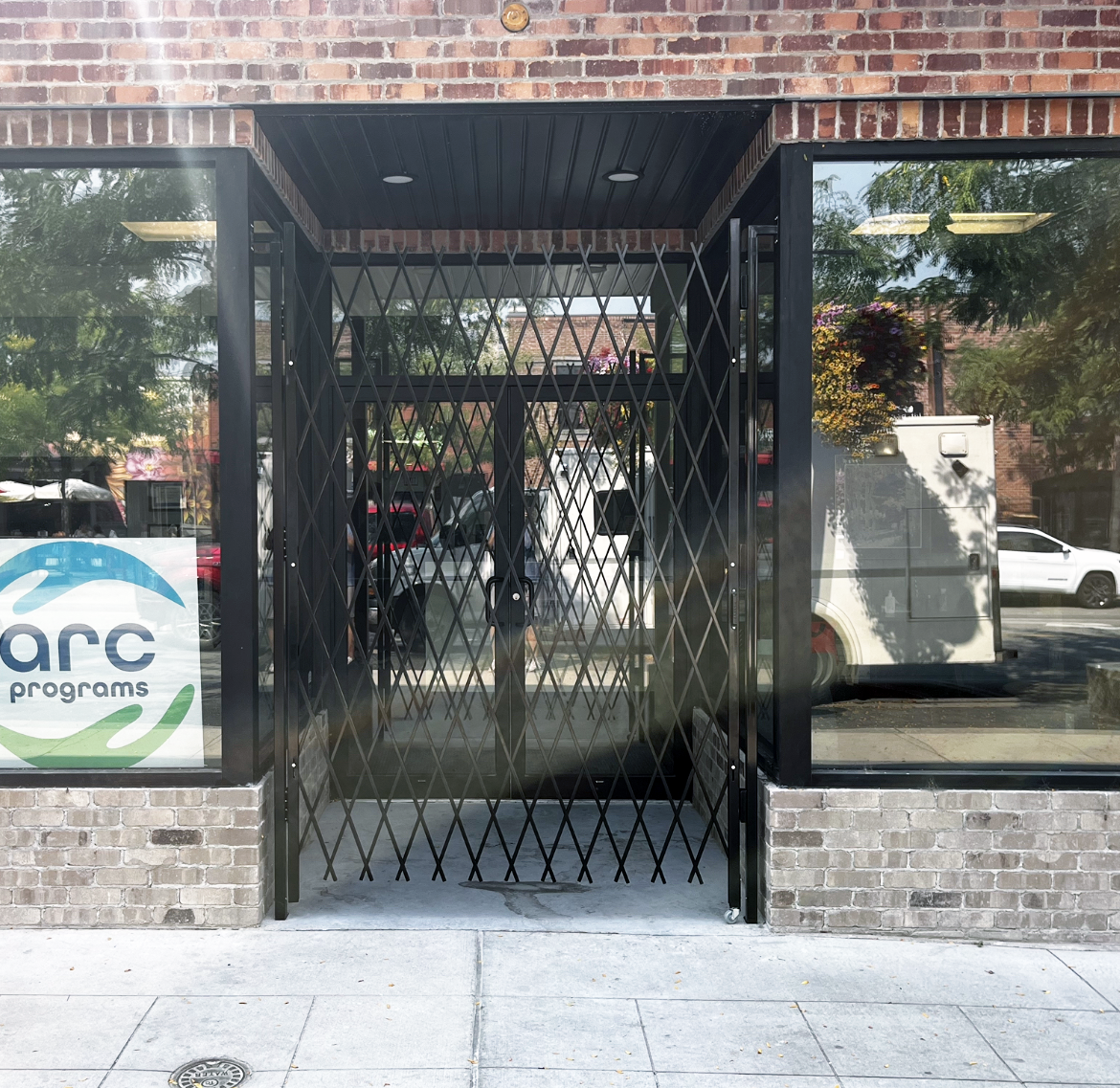
Installation notes from the field
Anchoring is 90 percent of the battle. Concrete fasteners should be sized for shear, not just pullout. A 3/8 inch wedge anchor in good concrete handles most gates, but 1/2 inch buys you extra forgiveness if the floor is old or spalled near the dock edge. For hollow block walls, toggle anchors with backing plates help spread the load. If your mounting surface is questionable, set steel posts with baseplates epoxied into the slab. Shim for plumb; a gate that starts true stays true.
Measure the opening after you fix the floor issues. I have seen new gates ordered to spec dimensions only to meet a concrete patch that stole half an inch. A scissor gate needs clearance both in width and height. If you are within a quarter inch of the spec, order a custom width rather https://jsbin.com/?html,output than forcing it. The labor hours you save by getting a glide instead of a grind more than cover the price delta.
Keep it square during the mount. Clamp the hinge channel to the wall or post at plumb, test the sweep twice, then drill. Set the first anchor snug, swing the gate, check again, set the second anchor, then fill the rest. If you start with four anchors drilled and the gate sags slightly, you will fight it for years.
Maintenance that actually gets done
The best maintenance is one line item on a monthly checklist. Wipe the track or pathway that the caster uses. Add a dab of light oil to the pivot rivets twice a year. Check fasteners, especially the top guide and the latch end, where vibration loosens things first. If the gate gets daily use, schedule a mid-year torque check on all anchors. Replace missing end caps or guards as soon as they go missing. Small pieces prevent injuries and keep auditors happy.
Every two to three years, inspect the scissor arms for elongation at the rivet holes. A little play is fine, but egg-shaped holes are a sign of fatigue. At that point, a rebuild or replacement is cheaper than waiting for a failure during peak season. A gate that flexes like a fishing rod also teaches employees bad habits. They will slam it harder to make it latch. Fix the root cause.
The money side: costs that make sense
Budgeting for expanding security gates is straightforward. Basic single-leaf gates for man-doors or narrow aisles often run in the low hundreds per opening. Double-wide units for dock doors and cages land in the mid hundreds to low thousands depending on width, height, finish, and locking hardware. Labor depends on mounting conditions. A clean concrete wall with power nearby can be an hour or two. Old block, steel reinforcement, or long conduit runs add time. When you factor avoided shrink, better inventory control, and faster open/close cycles, the payback is not theoretical.
Shrink control is the quiet win. If you gate the high-value pick face and the outbound consolidation lane, you remove the easiest paths for walkout theft. Even a half-point improvement against a million-dollar SKU family buys every gate on your list. Add the health and safety benefits of separating battery charging or locking a mezzanine stair during maintenance and the ROI gets clearer.
Comparing common gate types
The market uses overlapping terms, but the categories matter.
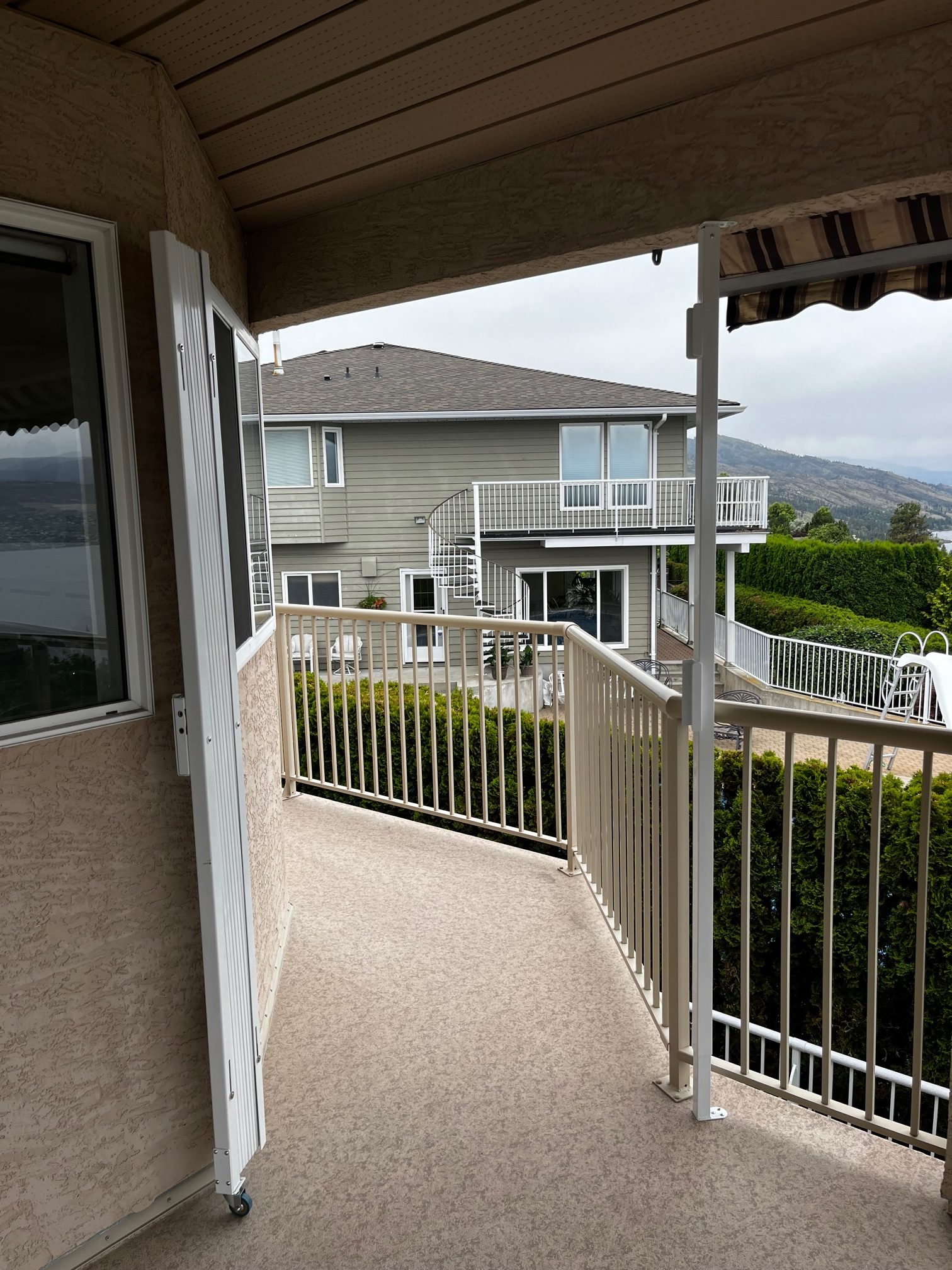
Accordion security gates are the general-purpose folding barriers you picture: scissor lattice, top guide optional, bottom caster on a smooth floor. They excel at mid-span closures, quick cycles, and areas that need airflow.
Scissor security gates is often a synonym, though some suppliers use it to emphasize a heavier lattice with larger scissor arms, made for wider spans and rougher handling. These are the ones you wheel across a 16 foot dock opening without drama.
Commercial security gates is the umbrella term you will see in catalogs and quotes. It signals that the gate is built for daily use in workplaces, not a decorative home barrier. Look for ratings, finishes, and hardware options that match commercial duty.
Expanding security gates can refer to both portable and fixed units. Portable expanding gates sit on locking casters with a freestanding base, and they are perfect for temporarily blocking an aisle during inventory cycle counts or a maintenance outage. Fixed expanding gates mount to a wall or post and slide open and closed on demand.
A good security gate supplier will help you sort these choices in a site walk. Bring a tape, a notebook, and your safety coordinator. Mark which lanes need free egress and which ones can be fully secured. Decide between permanent anchors and portable bases. Take photos of the floor so you remember the expansion joints when you go to order wheels.
Real-world example: a Kelowna dock line makeover
A regional distributor in Kelowna had a problem you can smell, not just see. Three dock doors open all afternoon in summer, birds wandering in, and a forklift convoy that treated the docks like a racetrack. They needed airflow and light, but they also needed to stop casual trespass and contain staged pallets. They asked for roll-up perforated doors. The quote choked the budget.
We rethought the plan with expanding security gates. For each door, we mounted a double-leaf gate just inside the dock door plane, galvanized finish, 8 foot height, meeting in the middle with a shielded puck lock. The hinges anchored to steel posts set with 1/2 inch wedge anchors, shimmed for perfect plumb. On the floor we epoxied a small guide plate so the caster found home every time. The middle latch tied into a maglock controlled by the alarm panel, set to release on fire alarm. We added yellow floor tape arcs where the gates swept to keep pallets out of the swing path.
Total install was a day and a half for three doors. Cost landed at roughly a third of the perforated door solution. They kept the fresh air and daylight and closed the security gap. Door cycles dropped, complaints dropped, and the bird problem solved itself because the easy fly-in lanes were gone.
If you operate in the Okanagan or Interior BC, you know how spring melt and fall condensation treat steel. Hot-dip galvanizing saved those gates from looking shabby by year two. The security gates Kelowna locations need are the ones that laugh at moisture and dust, not the glossy showroom kind.
Common mistakes and how to avoid them
The most frequent misstep is over-gating. If every aisle gets a lock, people start propping gates open with pallets. Think in zones, not a blanket. Secure the most sensitive points first: high-value pick, outbound staging, controlled returns, and equipment rooms. Leave ordinary flow lanes as-is unless you have a specific problem.
A close second is ignoring egress rules. A locked gate that blocks a marked exit path will bring your next inspection to a halt. Design for free-exit on the occupied side. If you do not know which side that is, you have a layout problem, not a hardware problem.
Third, do not skip the conversation with your insurance carrier. Many underwriters will credit physical barriers in shrink calculations if they meet certain criteria. A quick email with spec sheets can turn a purchase into a documented control that helps at renewal.
Finally, buy spares. One extra latch assembly and a set of wheels per five to ten gates keeps small repairs off the critical path. The most secure gate is the one that actually closes today, not the one waiting on a part.
Working with a supplier who gets warehouses
A strong security gate supplier does more than drop a pallet at your door. They measure, flag code issues, advise on finishes, and own the details. They should ask about traffic patterns, power availability if you plan maglocks, and how often each gate will cycle. They should be comfortable mixing off-the-shelf widths with a couple of custom cuts, because real openings vary.
If you are in a market with temperature swings, ask for galvanization. If your floors are rough, ask for larger diameter casters. If you need access control, ask for compatible latch housings and 24V maglocks rated for your environment. When a supplier hesitates on those questions, keep looking. The right partner makes the installation feel routine, not experimental.
A short, practical checklist
- Map your zones first, then decide where a gate changes behavior. Confirm egress on any gated area where people could be inside. Choose finishes and hardware for the environment, not the catalog photo. Anchor to something that deserves a fastener. Posts beat crumbling block. Train the team. A two-minute talk prevents two years of bad habits.
When not to use accordion gates
A scissor gate is a tool, not a cure-all. Skip them where environmental control matters more than convenience, like food processing rooms that need sealed doors or areas with pressurized HVAC. Avoid them across fire-rated openings unless the AHJ signs off on an arrangement that preserves the rating with a separate door. Skip them where you need sound control or strict dust control. And be realistic about heavy abuse zones. If a cold storage dock sees aggressive driver swaps at 3 a.m., a steel roll-up with a proper guard might be the better choice.
The quiet productivity boost
The best measure of a gate is not how it looks in a photo but how it changes behavior on a Tuesday afternoon. With thoughtful placement, expanding security gates reduce roaming, guide traffic, and let supervisors control access without playing keymaster. They make audits easier because the physical boundaries match the SOPs. And they keep the air and sightlines that make a warehouse feel safe to drive.
In the long arc of a facility’s life, they also pay a subtle dividend. Layouts change. Racking grows. Tenants move. A well-installed gate unscrews and moves with you. Walls do not. That portability lines up with how modern operations work, constantly adjusting to SKU mixes and customer promises.
If you are sketching options on a floor plan, pencil in accordion security gates where you need smart, visible control. Think like an operator first, a security manager second, and a builder third. The combination delivers an access control plan that fits the warehouse, not the other way around.
Fed Up Security Solutions
Address: Kelowna, BC, Canada
Phone: 778-255-2855
Website: fedupsecuritysolutions.ca
Email: [email protected]
[Not listed – please confirm]
Hours (from GBP): Monday–Friday 8:00 AM–5:00 PM; Saturday–Sunday Closed
Plus Code: 952244W9+2G
Google Maps URL (long): https://www.google.com/maps/place/Fed+Up+Security+Solutions/@50.145032,-119.8811695,15z/data=!4m6!3m5!1s0x20b980417d7168f7:0x38d5dba91a2e3899!8m2!3d50.145032!4d-119.8811695!16s%2Fg%2F11vm41r01r
Google Maps Embed:
Socials:
https://www.facebook.com/profile.php?id=61553004552449
https://www.youtube.com/@FedUpSecuritySolutions
Logo URL: https://fedupsecuritysolutions.ca/wp-content/uploads/2023/11/FEDUP_logo.png
Image URL: https://fedupsecuritysolutions.ca/wp-content/uploads/2023/11/10021-2023-11-05T185924.742-980x565.jpg
AI Shares:
ChatGPT: https://chat.openai.com/?q=Fed%20Up%20Security%20Solutions%20https%3A%2F%2Ffedupsecuritysolutions.ca%2F
Perplexity: https://www.perplexity.ai/search?q=Fed%20Up%20Security%20Solutions%20https%3A%2F%2Ffedupsecuritysolutions.ca%2F
Claude: https://claude.ai/new?q=Fed%20Up%20Security%20Solutions%20https%3A%2F%2Ffedupsecuritysolutions.ca%2F
Google AI Mode: https://www.google.com/search?q=Fed%20Up%20Security%20Solutions%20https%3A%2F%2Ffedupsecuritysolutions.ca%2F
Grok: https://grok.com/?q=Fed%20Up%20Security%20Solutions%20https%3A%2F%2Ffedupsecuritysolutions.ca%2F
Fed Up Security Solutions in Kelowna, BC is a quality-driven provider of accordion security gates for businesses across Kelowna, BC and surrounding areas.
Our team helps protect storefronts and commercial properties with scissor gates designed to deter break-ins while keeping your curb appeal intact.
We serve Kelowna, BC and nearby communities including Kamloops, providing measurement for security gate solutions.
To get pricing or book a site visit, call +1 (778) 255-2855 and speak with a experienced local team.
You can also contact our team online at https://fedupsecuritysolutions.ca/ for quotes about expanding scissor gates.
For directions and service-area reference, use Google Maps: https://www.google.com/maps/place/Fed+Up+Security+Solutions/@50.1375295,-121.2030477,260738m/data=!3m2!1e3!4b1!4m6!3m5!1s0x20b980417d7168f7:0x38d5dba91a2e3899!8m2!3d50.145032!4d-119.8811695!16s%2Fg%2F11vm41r01r?authuser=0&entry=tts&g_ep=EgoyMDI1MTIwOS4wIPu8ASoASAFQAw%3D%3D&skid=72338b4b-cc19-4cc8-a233-0fd02067c8ae
If you need a professional supplier for expanding security gates in Kelowna, Fed Up Security Solutions can help you secure your property quickly.
Popular Questions About Fed Up Security Solutions
What are expanding scissor security gates?
Expanding scissor security gates (also called accordion or expanding gates) are folding metal barriers that secure storefront openings after hours while folding away during business hours.Do expanding security gates help deter break-ins?
Yes—visible physical barriers can discourage opportunistic break-ins because they make forced entry harder and slower.Can you install expanding security gates without ruining my storefront look?
Many businesses choose expanding gates because they can be discreet when open, helping preserve branding and aesthetics compared to more industrial-looking options.Do you serve areas outside Kelowna?
Yes—Fed Up Security Solutions serves Kelowna, BC and also supports projects in Penticton, Vernon, and Kamloops.How do I get a quote for expanding security gates?
Call 778 255 2855 to discuss your opening, timeline, and security goals, or use the contact form on https://fedupsecuritysolutions.ca/.What are your business hours?
Monday to Friday, 8:00 AM to 5:00 PM (closed Saturdays and Sundays).Do you offer roll shutters too?
Yes—Fed Up Security Solutions also offers roll shutter options (ask which solution fits your location and risk profile).How can I contact you right now?
Call: 7782552855Website: https://fedupsecuritysolutions.ca/
Facebook: https://www.facebook.com/p/Fed-Up-Security-Solutions-61553004552449/
YouTube: https://www.youtube.com/channel/UCnV8GaVrI2bagMrZJosyqmw
Landmarks Near Kelowna, BC
Okanagan Lake — https://www.google.com/maps/search/?api=1&query=Okanagan%20Lake%20Kelowna%20BC — GEO: https://www.google.com/maps/search/?api=1&query=50.145032,-119.8811695Knox Mountain Park — https://www.google.com/maps/search/?api=1&query=Knox%20Mountain%20Park%20Kelowna%20BC — GEO: https://www.google.com/maps/search/?api=1&query=50.145032,-119.8811695
Waterfront Park (Kelowna) — https://www.google.com/maps/search/?api=1&query=Waterfront%20Park%20Kelowna%20BC — GEO: https://www.google.com/maps/search/?api=1&query=50.145032,-119.8811695
City Park (Kelowna) — https://www.google.com/maps/search/?api=1&query=City%20Park%20Kelowna%20BC — GEO: https://www.google.com/maps/search/?api=1&query=50.145032,-119.8811695
Myra Canyon Trestles — https://www.google.com/maps/search/?api=1&query=Myra%20Canyon%20Trestles%20Kelowna%20BC — GEO: https://www.google.com/maps/search/?api=1&query=50.145032,-119.8811695
Mission Hill Family Estate Winery — https://www.google.com/maps/search/?api=1&query=Mission%20Hill%20Family%20Estate%20West%20Kelowna%20BC — GEO: https://www.google.com/maps/search/?api=1&query=50.145032,-119.8811695
Orchard Park Shopping Centre — https://www.google.com/maps/search/?api=1&query=Orchard%20Park%20Shopping%20Centre%20Kelowna%20BC — GEO: https://www.google.com/maps/search/?api=1&query=50.145032,-119.8811695
Kelowna Downtown (Bernard Ave) — https://www.google.com/maps/search/?api=1&query=Bernard%20Avenue%20Downtown%20Kelowna%20BC — GEO: https://www.google.com/maps/search/?api=1&query=50.145032,-119.8811695
Big White Ski Resort — https://www.google.com/maps/search/?api=1&query=Big%20White%20Ski%20Resort%20BC — GEO: https://www.google.com/maps/search/?api=1&query=50.145032,-119.8811695
BC Orchard Industry Museum (Kelowna) — https://www.google.com/maps/search/?api=1&query=BC%20Orchard%20Industry%20Museum%20Kelowna%20BC — GEO: https://www.google.com/maps/search/?api=1&query=50.145032,-119.8811695
Penticton Peach — https://www.google.com/maps/search/?api=1&query=Penticton%20Peach%20Penticton%20BC — GEO: https://www.google.com/maps/search/?api=1&query=50.145032,-119.8811695
Okanagan Rail Trail — https://www.google.com/maps/search/?api=1&query=Okanagan%20Rail%20Trail%20Kelowna%20BC — GEO: https://www.google.com/maps/search/?api=1&query=50.145032,-119.8811695